Every year, Nigerians abroad send millions home to contractors who divert funds, or disappear entirely. The problem is not the distance. It is the payment system. This guide breaks down how escrow for construction in Nigeria works in 2026, which platforms are legitimate, and exactly how to structure your payments so your money never moves until real work is confirmed.
By Godswill Essien, Construction Project Manager & Founder, Buildtracka | Updated May 2026
Thousands of Nigerians at home and in the diaspora have sent money to contractors in exchange for a building project and receive nothing in return. Escrow for construction in Nigeria exists to end that cycle. I’ll discuss how it works, which platforms are legitimate, and exactly how to structure your payments so your money only moves when real work is done.
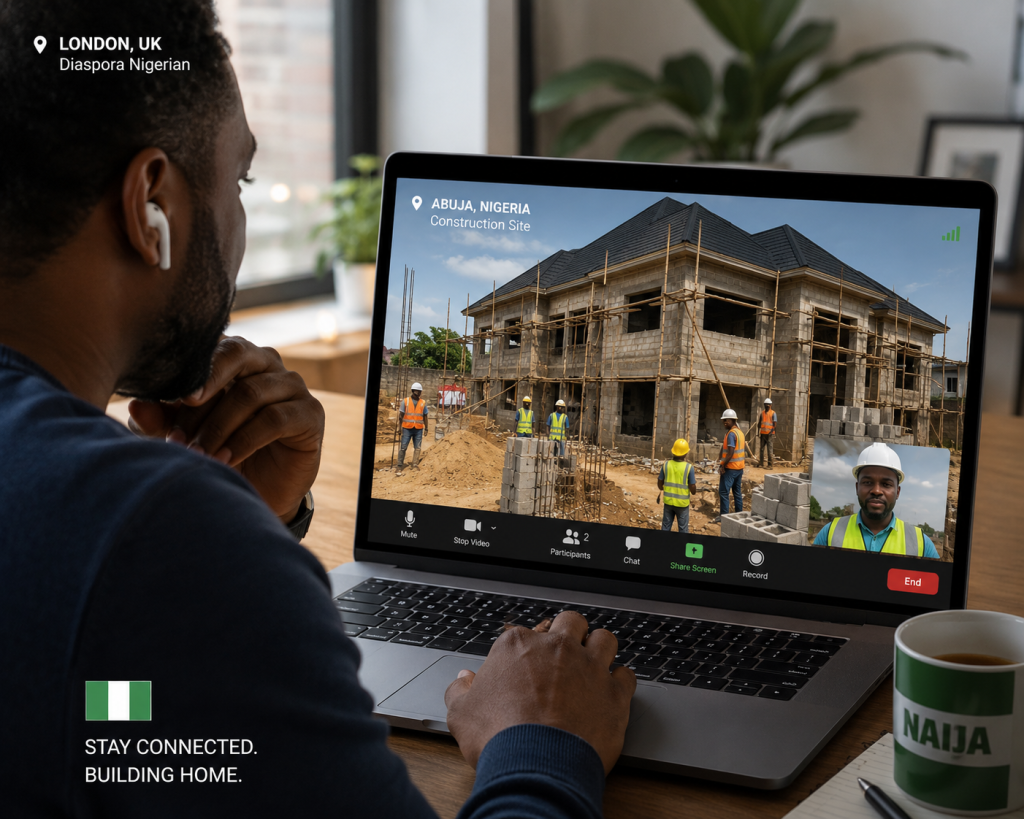
I have been in construction project management long enough to know that contractor fund diversion is one of the primary reasons Nigeria has abandoned projects scattered from Lagos to Ibadan to Enugu, and one of the biggest fears keeping diaspora Nigerians from building back home. But the tools now exist to take that fear completely off the table if you know how to use them.
This guide covers everything: what escrow actually is, how to set it up for your Nigerian build, which platforms are legitimate, how milestone-based payments work in practice, and what to watch out for before you deposit a single kobo.
Escrow for construction in Nigeria works in 6 steps:
Escrow is regulated by the Central Bank of Nigeria (CBN). Fees range from 1.25% to 3.25% of the transaction value. It applies to projects of any size from a ₦10M bungalow in Owerri to a ₦300M commercial development in Lekki.
Escrow is a financial arrangement in which a neutral third party (the escrow provider) holds funds on behalf of two parties until both sides fulfil their agreed conditions. In the context of construction, that means your money goes in, stays there, and only moves to the contractor after you’ve verified the work done at each stage.
Think of it as a disciplined middleman. You do not hand cash directly to the contractor. Instead, you deposit into a trust account managed by a bank, a fintech platform, a registered lawyer, or a construction project management firm. The money is released only when the agreed conditions tied to a specific construction milestones are met.
Escrow protects both parties. It protects you from a contractor who takes payment and disappears. Escrow also protects a genuine, hardworking contractor from a client who refuses to pay after work is legitimately completed. This is a fair arrangement for everyone.
That two-way accountability is the fundamental shift that escrow payments in construction in Nigeria brings to an industry that has, for too long, been defined by mistrust on both sides of the project table.
Yes. Escrow services in Nigeria operate under the oversight of the Central Bank of Nigeria (CBN) and must comply with Anti-Money Laundering (AML) regulations and Know Your Customer (KYC) requirements. This is not a grey-market workaround. It is a legitimate, financially regulated mechanism with real legal backing.
Major Nigerian banks including First Bank, FCMB, and Stanbic IBTC all run formal escrow services. A growing number of CBN-licensed fintech platforms have made the same infrastructure accessible to individuals not just oil companies and government contractors. No matter the size of your project, there is an escrow solution available at your scale.
Setting up escrow is more straightforward than most people expect. Here is the process from start to finish:
Select a platform based on your project size, whether you need multi-currency support for diaspora transfers, and whether you prefer a fintech platform or a bank-backed institution. The platforms section below covers the strongest options in detail.
Every legitimate escrow provider requires identity verification. Typically that means a government-issued ID and proof of address for both the property owner and the contractor. This step protects everyone and is a positive signal that the platform is properly regulated.
Work with your contractor to agree on the full scope of work, the specific milestones, timelines, and the payment amount tied to each phase. The escrow provider formalises this into a binding agreement. For projects above ₦10 million, have a lawyer review the agreement before signing.
You transfer the agreed amount or the first tranche into the escrow account. The contractor is notified that funds are secured and work can begin. Importantly, the contractor does not have access to the money yet.
Use video calls, drone footage, geo-tagged photo reports from your Project Manager, or third-party site inspection reports to verify each milestone as it is completed. Some platforms like Dependly automate this with AI-verified, geo-stamped evidence submission.
When you are satisfied with a completed phase, you approve the release and the platform transfers payment to the contractor promptly. You repeat this cycle for every phase until the project reaches full completion, final inspection, and formal handover. The last tranche typically 5% is held until handover is signed off.
If a disagreement arises at any point, maybe your contractor claims a milestone is complete and you disagree, the escrow platform freezes the relevant payment while both parties submit evidence. A mediator reviews and makes a determination. The fund is either released or returned based on the outcome. This is one of the most important features to confirm before choosing your provider.
The Rule I Apply on Every Buildtracka Project: Before I approve any payment release, I carry out a milestone verification through an on-site visit, geo-tagged video from our ground team, or a drone inspection report. The escrow platform only receives my approval after that check is complete. No verification, no release. This is what verified milestone payment in Nigeria actually looks like when it is done properly.
Nigeria’s construction and real estate sector has grown sharply, fuelled in large part by diaspora investment. According to available figures, diaspora remittances to Nigeria reached approximately $20.93 billion in 2024, with an estimated 30% around $6.28 billion directed toward real estate and construction. That is a huge amount of trust being extended across thousands of kilometres. And too much of it has been betrayed.
Here are the five most common problems that escrow directly eliminates:
Related reading: How to Build a House in Nigeria from Abroad in 2026 – Full Diaspora Guide
Milestone-based escrow is the gold standard for construction project funding. Rather than releasing money in bulk at the start, each tranche is tied to a verified phase of completed work. Here is the structure I use when managing remote projects through Buildtracka:
| Construction Phase | Milestone Trigger for Release | % of Budget Released |
|---|---|---|
| Mobilisation / Site preparation | Agreement signed and site secured | 10% |
| Foundation & substructure | Verified by QS or Project Manager | 20% |
| Superstructure (walls & columns) | Photo/video evidence + on-site inspection | 25% |
| Roofing | Completion confirmed on-site or via drone | 20% |
| Finishing (plumbing, electrical, tiling) | Punch-list sign-off by PM and client | 20% |
| Handover | Final inspection and client approval | 5% |
| TOTAL | 100% |
Notice that the contractor never receives more than 10% before any physical work is confirmed. Every subsequent release requires verified evidence of completion. The final 5% is withheld until you have physically or virtually inspected the property and formally signed off on handover.
This structure removes the biggest risk in remote construction: paying for work that has not been done.
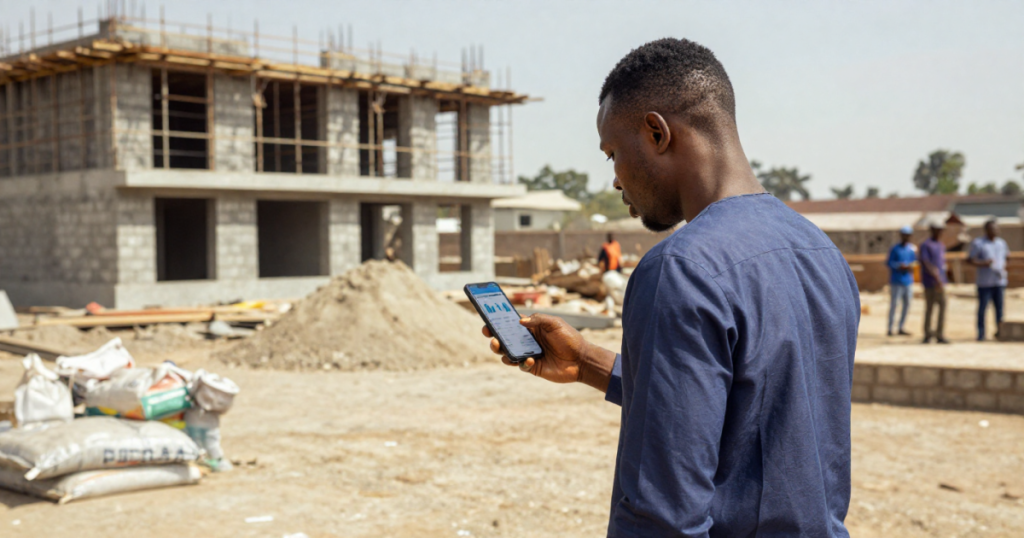
Not all escrow platforms are suited to construction financing. Some are built for e-commerce transactions. Others handle high-value, multi-phase contract payments with proper milestone disbursement tools. Here is a curated breakdown of the most reliable options for Nigerian building projects in 2026:
One of Nigeria’s most established digital escrow platforms and well-suited to construction and real estate transactions. Vesicash supports split payments, milestone disbursement, and high-value transactions for both individual and commercial clients. A strong starting point for diaspora Nigerians managing significant remote builds.
The most technologically advanced escrow option for construction in Nigeria right now. Dependly offers AI-verified milestone tracking, geo-stamped evidence submission, and automated fund release tied directly to verified project progress. Contractors submit geo-tagged updates; you review and approve; funds release automatically. Purpose-built for diaspora-funded, multi-phase building projects. This is the platform closest to construction-specific escrow.
Operates across all Nigerian states, Lagos, Abuja, Port Harcourt, Kano, Enugu, and beyond. Holds funds in CBN-regulated bank accounts insured by the NDIC. Fees range from 1.25% to 3.25% of the transaction value, among the most competitive in the market. Free to start. You only pay when a transaction proceeds.
Collaborates with CBN-licensed banks and payment processors to offer transparent, secure transactions. Praised for being straightforward to use and offering a B2B API for integration into project management workflows. Has a dedicated dispute resolution team that actively mediates disagreements between contracting parties.
Specialises in property and real estate escrow in Nigeria. Its Instant Escrow platform allows property owners and contractors to manage payments and transaction details efficiently, with strong focus on protecting advance deposits. A reliable option for diaspora investors buying off-plan or funding construction on properties they cannot physically inspect.
An AI-powered smart escrow platform with a focus on milestone-based payouts. Originally designed for freelancer and merchant transactions, but its milestone payment structure translates well to construction contracts where payment is tied to deliverables. Quick onboarding walkthrough makes it accessible for first-time escrow users.
For large-scale or corporate construction projects, First Bank’s escrow offering is the institutional benchmark. Provides escrow for construction, energy, infrastructure, and PPP arrangements, and supports cross-border transactions for foreign or diaspora clients. If your project involves significant capital or requires the credibility and oversight of a Tier-1 Nigerian bank, this is where to start.
Particularly strong for diaspora investors due to its multi-currency capability. FCMB Trustees can open offshore escrow accounts to hedge against foreign exchange losses, manage accounts in multiple currencies, and ensure strict compliance with client instructions including payment of approved invoices and idle fund tracking. For anyone sending dollars, pounds, or euros toward a Nigerian build, FCMB’s forex protection feature is a meaningful advantage.
Acts as a formal intermediary between project owners and their contractors, overseeing the legal escrow agreement, providing full documentary services, and managing deposit and payment execution per agreed terms. A solid institutional choice for mid-to-large construction projects where regulatory oversight and legal documentation are priorities.
A CAC-registered Nigerian escrow company with funds held in segregated accounts across FCMB, UBA, and Moniepoint. Features two-factor authentication, anti-fraud compliance policies, and strict data security protocols. A solid option for individuals and small-to-medium construction projects seeking an accessible, locally grounded provider.
Some platforms look like escrow services but are essentially glorified savings accounts with no legal backing or regulated dispute process. Before committing any funds, verify the platform’s CBN alignment, check for CAC registration on the Corporate Affairs Commission portal, confirm NDIC insurance, and look for media mentions in credible Nigerian publications. If a platform pressures you to move fast or cannot clearly explain its dispute process, walk away.
Yes, and for diaspora Nigerians, this matters considerably. The naira has experienced significant volatility in recent years. Converting foreign currency at the wrong moment in a construction project can cost you millions of naira in lost value.
FCMB Trustees offers multi-currency escrow accounts and can open offshore escrow arrangements specifically to protect against foreign exchange losses. Some platforms allow you to lock in the exchange rate at the point of escrow deposit, protecting you from currency slippage across a construction phase that may last months.
This is one area where cross-border construction escrow in Nigeria has genuinely matured. It is no longer just a domestic tool. It is now built for the diaspora investors who are managing naira-denominated projects on a dollar-denominated income.
The Nigerian government, through NiDCOM and the Federal Mortgage Bank of Nigeria, is actively encouraging structured, transparent investment from the diaspora. PropTech firms are being offered incentives to develop platforms that incorporate escrow payments and milestone-based construction trackers.
States including Lagos and Oyo are piloting blockchain-secured land title records to make remote property verification more reliable. The policy direction is clear: government wants diaspora capital to flow safely and productively into Nigerian real estate, and escrow is a central part of that infrastructure.
Related reading: LASPPPA Building Permit Lagos 2026, Process, Fees, and Timeline, understand the approval requirements before your contractor breaks ground.
Related reading: Cost of Building a Bungalow vs Duplex in Nigeria 2026 to see the full cost breakdown before you structure your escrow tranches.
Fees typically range from 1.25% to 3.25% of the transaction amount depending on the platform and deal size. Bank-based escrow services from First Bank, FCMB, and Stanbic IBTC may negotiate flat fees for large construction projects.
Absolutely. Platforms like EscrowLock cover all Nigerian states, from Kano to Owerri and Asaba. As long as both parties have valid IDs and bank accounts, escrow is available regardless of build location.
Not always. For fintech platforms handling smaller transactions, the platform itself manages the agreement. For bank-based escrow or any project above ₦10 million, having a lawyer draft or review the escrow agreement is strongly advisable. The cost is small relative to what it protects.
Choose a platform that supports multi-currency or international transfers like FCMB Trustees, Dependly, and Vesicash. Set up your milestone payment structure with your contractor and Project Manager. Fund the escrow account via wire transfer from your foreign bank account or through a remittance partner. Payments are then release phase by phase. No more lump-sum risk.
The standard toolkit in 2026 includes geo-tagged photography, drone footage, video walkthroughs, digital QS reports, and AI-powered milestone verification. It is also adviceable to combine on-ground PM site visits with video evidence submitted directly to the client for approval before any escrow release is authorised.
You raise the dispute through the escrow platform’s built-in dispute channel. The platform freezes the relevant payment while investigating. Both parties submit evidence like photos, videos, contracts, WhatsApp records. A mediator reviews and makes a determination. Afterwards, funds are released or returned based on the outcome.
Trust matters in construction. But trust without a system is just hope, and hope does not build houses.
Escrow for construction in Nigeria is no longer a corporate tool reserved for multinationals and government contracts. It is accessible to any Nigerian funding a build, whether you are a civil servant in Abuja hiring a local contractor, or a nurse in Manchester building her retirement home in Anambra.
The platforms exist. The regulations are in place. The technology has caught up. What remains is a decision: stop sending money based on faith alone, and start sending it on verified, milestone-protected terms.
As a construction project manager, I serve as the verification link between you and the escrow platform, confirming work on the ground before a single naira exchanges hands. If you are building in Nigeria and want to know how to structure your payments safely, that is where to start.
The goal is not just to build a house. It is to build it without losing your money or your peace of mind along the way.
Need Help Structuring Your Remote Build? Reach out to the Buildtracka team at buildtracka@gmail.com. We work with diaspora Nigerians from project planning through to handover, including full escrow milestone verification so your funds only move when real work is confirmed on the ground.
About the Author
Godswill Essien is a construction project manager and the founder of Buildtracka, a construction project management firm specializing in helping Nigerians at home and in the diaspora build safely, transparently, and within budget. He is also the publisher of Build With Ease, a blog dedicated to educating Nigerians on how to navigate their building projects without losing money or peace of mind. Reach him at buildwitheasehq@gmail.com.