Architects charge between 5%-10% of a project cost. Most Nigerians find out what an architect charges after they've already asked for a design. By then, the negotiation leverage is gone. Here's what you should know before you make that first call
How much do architects charge in Nigeria in 2026? If you’re planning to build, this is one of the first questions you need answered because not knowing how much architectural drawings in Nigeria is and getting it wrong can cost you far more than the design itself.
In Nigeria today, architect fees are not fixed. They vary based on your project type, location, and the level of service you need. Some people pay as little as ₦150,000 for basic drawings, while others spend millions depending on the complexity of the project.
In this guide, you’ll get a full breakdown of architect fees in Nigeria, the costs of architectural drawings including percentage rates, real cost examples, and what you should expect to pay at each stage of your building project.
Whether you’re planning a bungalow, duplex, or a more complex development, this article will help you budget properly and give you insights as to how much architectural drawings costs in 2026 before you start building.
Whether you’re building your first 3-bedroom bungalow in Enugu, planning a duplex in Lagos Island, or commissioning a commercial building in Abuja’s Central Business District architect fees in Nigeria and the cost of architectural drawings are something you need to understand before you start writing any cheques.
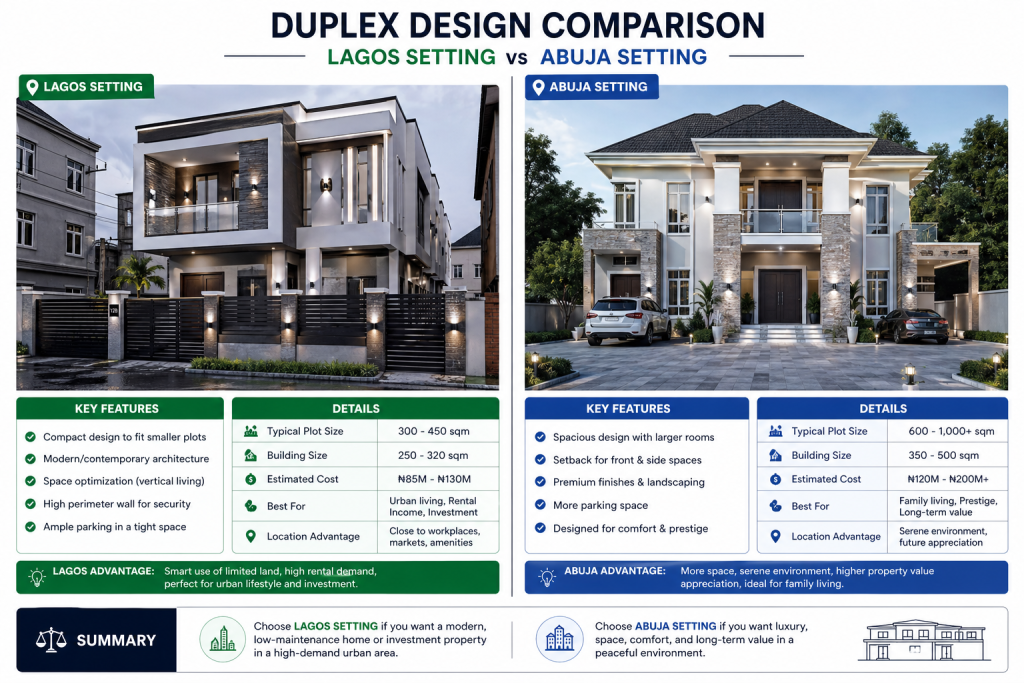
Before you even finalize with your architect, it’s important to understand the type of building you want, because your choice directly affects your overall budget. Whether you’re considering a bungalow or a duplex, the cost difference can be significant. Here’s a complete guide comparing the cost to build a bungalow vs duplex in Nigeria (2026) to help you make a smarter decision on your build.
So grab a seat. Let’s break it all down.
Architect fees in Nigeria typically range between 5% and 15% of the total construction cost, depending on the scope of work, project size, and the architect’s experience.
For smaller or less complex projects, some architects may charge fixed fees, starting from around ₦150,000 to ₦500,000 for basic design drawings. However, for full architectural services including design, working drawings, approvals, and site supervision, fees may be calculated as a percentage of the total project cost.
For example:
It’s important to understand that these fees are not arbitrary. They reflect the value, expertise, and risk management an architect brings to your project.
In the next sections, we’ll break down exactly how these fees are structured and what factors influence what you’ll pay.
See how architect fees compare to quantity surveyor charges.
At its core, an architect fee is what you pay a professional to design your building, prepare drawings, obtain approvals, and in many cases, supervise the construction. It’s not just about someone sketching a floor plan. A registered architect is responsible for the safety, aesthetics, functionality, and legal compliance of your structure.
In Nigeria, architect fees are typically calculated in two main ways:
For 2026, the general benchmark looks like this:
| Project Type | Fee Range (% of Construction Cost) | Estimated Naira Range |
|---|---|---|
| Residential Bungalow | 3–6% | ₦150,000 – ₦800,000 |
| Duplex / Storey Building | 4–7% | ₦300,000 – ₦2,000,000+ |
| Commercial Building | 5–8% | ₦500,000 – ₦5,000,000+ |
| Design Only (No Supervision) | Fixed or 2–4% | ₦100,000 – ₦500,000 |
Note: These figures reflect 2026 market rates with inflationary adjustments. Construction costs and architect fees have risen significantly since 2023.

This is the question I get most often and the answer will depend on your location, the complexity of your design, and whether you want a registered architect or not.
For a straightforward 3-bedroom bungalow in Nigeria, here’s what’s realistic in 2026:
In major cities like Lagos and Abuja, expect to pay on the higher end of those ranges. In states like Kogi, Benue, or rural parts of Oyo, you might find slightly lower quotes; but “cheap” isn’t always “good,” as we’ll get into later.
The Architects Registration Council of Nigeria (ARCON) and the Nigerian Institute of Architects (NIA) both publish recommended fee scales for professional services. In 2026, the NIA Scale of Fees recommends:
The commitment fee idea exists for a good reason. It protects architects from clients who “shop around,” collect free sketches, and disappear. If an architect asks for an upfront fee before presenting any drawings, that’s not a red flag. That’s professional practice.
However, these fee scales are guidelines, not law. In practice, architect fees in Nigeria are often negotiable especially for smaller residential jobs.
If you’re building a duplex, the location matters. Significantly.
| Location | Design Fee Range | Supervision Fee Range |
|---|---|---|
| Lagos Island / Victoria Island | ₦500,000 – ₦2,500,000 | ₦300,000 – ₦1,200,000 |
| Lagos Mainland | ₦300,000 – ₦1,200,000 | ₦200,000 – ₦700,000 |
| Abuja (Maitama, Asokoro) | ₦600,000 – ₦2,800,000 | ₦350,000 – ₦1,500,000 |
| Abuja (Suburbs / Satellite Towns) | ₦250,000 – ₦800,000 | ₦150,000 – ₦500,000 |
| Port Harcourt | ₦300,000 – ₦1,000,000 | ₦200,000 – ₦600,000 |
| Other States (Average) | ₦150,000 – ₦700,000 | ₦100,000 – ₦400,000 |
Also Read: Should I Build a Bungalow or Duplex in Nigeria? The Honest 2026 Guide
Lagos prices are high because land values are high, projects are often more complex, and the pool of high-end clients pushes fees up. Abuja’s premium neighborhoods are equally pricey. But don’t assume expensive = excellent. Always verify credentials.
This is where things get serious.
A registered architect is licensed by ARCON and the NIA, has completed formal education and internship requirements, and is legally authorized to stamp drawings for building approvals. An unregistered “architect” often a draftsman, technician, or even a student is not legally permitted to certify building plans.
Why does this matter? Because:
Registered architects typically charge 30–60% more than unregistered practitioners for the same scope of work. But that premium buys you legal protection, professional accountability, and quality assurance.
To verify an architect, check the ARCON website or ask to see their current practicing license.
Yes. And sometimes it’s worth it. But let’s be real about the trade-offs.
Architecture students (especially those in their final years) can produce decent drawings at a fraction of professional cost. You might pay ₦50,000 – ₦100,000 for a basic floor plan. Some are genuinely talented and technically sound.
The problem? Their drawings cannot be legally stamped for planning approval. You’d still need a registered architect to certify the work which means you could end up paying twice.
My honest professional advice: Use student work for concept development or interior visualization. Don’t rely on it for your primary building drawings unless you’re willing to pay an extra fee to get the drawings reviewed and certified by a licensed architect. Anything outside of this is a no brainer as far as I am concerned.
Here’s the thing. Architect fees in Nigeria aren’t pulled from thin air. They’re influenced by a mix of variables:
1. Project Complexity A 3-bedroom bungalow with a standard layout is far simpler than a smart home with automated systems, rooftop solar integration, and custom façade designs. Complexity drives fees up and honestly it should.
2. Location Urban centers charge more. Full stop.
3. Design Scope Are you hiring for:
Each level adds to the fee.
4. Project Size (Square Meterage) Some architects charge per square metre for large projects. In 2026, architectural drawing costs in Nigeria range from roughly ₦3,000 – ₦10,000 per sqm depending on complexity and location.
5. Reputation and Experience A firm with 20 years of experience and award-winning designs will charge more than a fresh graduate and for good reason.
Short answer: Yes. Long answer: very much yes.
Here’s a counterintuitive truth that I’ve seen play out on projects over and over again. Clients who skip the architect to “save money” often spend significantly more fixing mistakes during construction. Structural errors, substandard room proportions, poor drainage design, code violations are expensive problems that a good architect prevents before it appears. It is pretty how one plans to spend a huge amount of money on building a great house but commit less than a million naira for the design which is the project’s blueprints.
A competent architect can:
Think of architect fees not as a cost but as risk insurance on your biggest investment.
This is a critical point that confuses a lot of people.
Standard architectural fees typically cover:
Structural drawings are usually separate, prepared by a structural/civil engineer. You’ll typically pay an additional ₦100,000 – ₦500,000+ for a structural engineer’s fees depending on project size.
Always clarify exactly what’s included in your architect’s quote before signing anything.
Absolutely but negotiate smart, not cheap.
Here’s what actually works:
What doesn’t work is asking a professional to do quality work for a pittance and then being surprised when the output reflects what you paid. Nigeria’s construction inflation is real. The cost of professional time has gone up significantly since 2023, and 2026 fees reflect that reality.
Most registered architects in Nigeria use a milestone-based payment structure:
| Stage | Payment (% of Total Fee) |
|---|---|
| Commitment / Retainer (upfront) | 10–20% |
| Schematic Design Completion | 20–30% |
| Working Drawings Completion | 30–40% |
| Tender/BOQ Stage | 10% |
| Construction Supervision (monthly) | Balance spread over duration |
If an architect asks for 100% upfront that’s a red flag.
A fair quote should:
If it’s your first time commissioning a building and you’re not sure where to start, you don’t have to navigate this alone. At Buildtracka, we offer integrated construction project management services which includes helping clients select vetted, registered architects and managing the entire process from design to handover. You can focus on your vision; we handle the professional sourcing and oversight.
When you’re paying professional fees, you want to know your architect is using professional tools. Here are some of the industry-standard software platforms used by Nigerian architects in 2026:
If your architect is still doing hand drawings with no digital tools, that’s worth a conversation about their capacity to deliver quality documentation.
Q: What is the standard architect fee percentage for house projects in Nigeria? A: For residential buildings, the NIA recommends 3–6% of total construction cost. In 2026, this ranges from ₦150,000 to over ₦2 million depending on project size and location.
Q: Are architect fees negotiable in Nigeria? A: Yes, but within reason. You can negotiate on scope, payment schedule, or bundled services. Don’t negotiate so hard that you compromise on quality.
Q: Do architect fees include structural drawings? A: Usually not. Structural drawings are a separate service by a structural engineer.
Q: How do I know if my architect is registered? A: Verify current ARCON (Architects Registration Council of Nigeria) practicing license and cross-check on the ARCON register. The architect’s registration stamp on drawings is legally required for building approval in Nigeria.
Q: Can I hire an architecture student for cheap house plans? A: Yes, but their drawings cannot be stamped for town planning approval. You’d still need a registered architect to certify the work.
Q: How much does a duplex architect design cost in Lagos vs. Abuja? A: Lagos Island and Abuja’s premium districts typically range ₦500,000–₦2,800,000 for duplex design services. Less developed areas and other states are significantly lower.
Here’s my parting words: architect fees in Nigeria in 2026 are a small fraction of your total building cost and the right architect can save you multiples of their fee in avoided mistakes, smarter design, and better contractor management.
Do your homework. Verify credentials. Get everything in writing. If you want help navigating the process from finding the right architect to managing your entire project, Buildtracka Integrated Services exist precisely for this reason. We’ve helped clients across Nigeria build smarter, faster, and with less stress.
Your dream home deserves professional hands from day one.
Have questions about your specific project? Drop them in the comments or reach out directly. I read every message.
How to Build a House in Nigeria in 2026: The Complete Step-by-Step Guide (From Land to Keys)
Lagos Building Plan Approval in 2026: What LASPPPA Needs, What It Costs, and How Long It Takes
Procurement in Construction in Nigeria: How to Buy Building Materials in Nigeria (2026)

I love you work I have alot of properties for sale
Goodafternoon Marshal. kindly send an email to buildwitheasehq@gmail.com so we can discuss modalities on how we can possibly work together.
[…] or reputable firms on LinkedIn. Do not hire anyone without verifiable registration. See also: How Much Architects Charge in Nigeria in 2026 (With Real Project Examples) — understand what you should pay before you […]