How much do quantity surveyors charge in Nigeria in 2026? From BOQ preparation to full project cost management. Here are the exact fees, by project type, location and service scope.
In Nigeria in 2026, quantity surveyors typically charge between 1.5% and 5% of total project construction cost for full professional services, depending on project size and location. For BOQ preparation alone, expect to pay ₦100,000 to ₦250,000 for residential projects and ₦250,000 to ₦600,000+ for commercial builds. Hourly consulting rates run between ₦10,000 and ₦35,000. Lagos and Abuja sit at the higher end of every range.
Before we talk money, let’s quickly talk value, because understanding what you’re paying for changes how you feel about the cost.
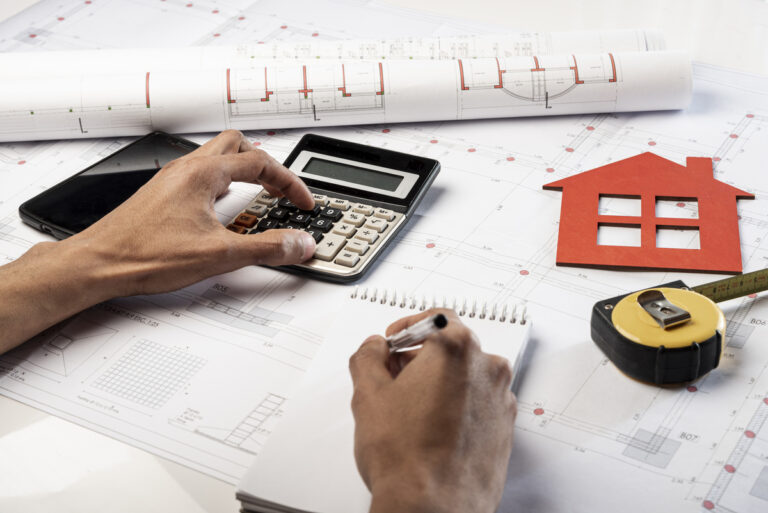
in plain simple terms, a quantity surveyor is the financial manager of your construction project. Your architect draws the vision. Your structural engineer makes it stand. The QS makes sure it doesn’t quietly drain your account while the other two are doing their jobs.
Here’s what a QS handles on a typical construction project:
In short: the QS is the person who keeps your ₦30 million project from quietly becoming a ₦52 million project.
Here are the real and current 2026 numbers, by fee method and service type.
The most common method for full professional QS services is a percentage of total construction cost, aligned with the Nigerian Institute of Quantity Surveyors (NIQS) recommended scale of fees.
| Project Construction Cost | Recommended QS Fee (%) | Example Fee |
|---|---|---|
| Up to ₦10 million | 4% – 5% | ₦400,000 – ₦500,000 |
| ₦10m – ₦50 million | 3% – 4% | ₦750,000 – ₦1,500,000 |
| ₦50m – ₦200 million | 2.5% – 3% | ₦1,750,000 – ₦4,500,000 |
| ₦200m – ₦500 million | 2% – 2.5% | ₦5,000,000 – ₦10,000,000 |
| Above ₦500 million | 1.5% – 2% | Negotiated case by case |
Real example: A 4-bedroom duplex with a construction budget of ₦35 million will attract a full-service QS fee of roughly ₦1,050,000 to ₦1,400,000 in 2026. That covers everything from cost planning at design stage to final account settlement.
Some QS firms, particularly in Lagos, Abuja, and Port Harcourt, have shifted to per-square-metre pricing for cleaner project-based billing. Here’s where those rates sit in 2026:
| Building Type | QS Rate Per m² (2026) |
|---|---|
| Residential (bungalow or duplex) | ₦2,500 – ₦5,000/m² |
| Commercial (offices, shops, retail) | ₦4,000 – ₦8,000/m² |
| Industrial / warehouse / logistics | ₦3,000 – ₦6,000/m² |
So, a 250m² 4-bedroom bungalow at ₦3,500/m² puts your QS fee at roughly ₦875,000 before any location premium is considered.
If you’re not hiring a QS for full project oversight but just need a solid Bill of Quantities before approaching contractors, the fees are lower and typically fixed.
How much do quantity surveyors charge for BOQ preparation in Nigeria in 2026?
| Project Type | BOQ Preparation Fee |
|---|---|
| Small residential (up to 3 bedrooms) | ₦80,000 – ₦150,000 |
| Medium residential (4–5 bedrooms, duplex) | ₦150,000 – ₦250,000 |
| Commercial or mixed-use development | ₦250,000 – ₦600,000+ |
| Industrial or large-scale | ₦500,000 and above |
Some QS firms price BOQ work using a unit-rate model, approximately ₦45 to ₦75 per line item in the document. A detailed residential BOQ can run 500 to 800+ line items. Do that maths before you assume it’s cheap.
For one-off consultations, site cost audits, contractor dispute resolution, or project reviews, many QS professionals charge by the hour.
QS hourly rates in Nigeria 2026 ranges from ₦10,000 – ₦50,000 per hour
Senior partners at established firms in Lagos and Abuja tend toward the ₦25,000–₦50,000. Mid-level QS professionals typically charge ₦10,000–₦25,000 per hour.
This is a reasonable way to engage a QS if you just need a second opinion on a contractor’s quote before you sign anything.
Geography matters when you’re asking how much quantity surveyors charge in Nigeria. Here’s an honest city-by-city comparison:
Lagos, being at the top of the range. Full-service residential QS fees typically run 3.5% – 5% of project cost. Minimum fees of ₦150,000+ are standard even on smaller jobs. Operating costs in Lagos are higher, and the professional market supports premium pricing.
Abuja is next with a strong QS market with established firms like Elevated QS. Rates sit at roughly 2.5% – 4% for residential work, with slightly lower minimums than Lagos. Still very professional, slightly more accessible pricing.
Port Harcourt is similar to Abuja for residential work. Commercial and oil-sector projects attract significantly higher fees due to project complexity and professional liability.
Kaduna, Kano, Abeokuta, Delta, and other states generally have the most accessible pricing: 1.5% – 2.5% for equivalent residential scope. Lower regional construction costs naturally produce lower QS fees.
| City / Region | Full-Service QS Fee Range | Typical Residential Minimum |
|---|---|---|
| Lagos | 3.5% – 5% | ₦150,000+ |
| Abuja | 2.5% – 4% | ₦100,000 – ₦120,000 |
| Port Harcourt | 2.5% – 3.5% | ₦100,000 |
| Other cities/states | 1.5% – 2.5% | ₦60,000 – ₦80,000 |
The ranges above are starting points. Here’s what pushes your QS fee up or down within those ranges:
Project size and complexity: A straightforward 2-bedroom bungalow is a different brief from a 6-unit apartment block with shared facilities. More moving parts means more QS time and more professional accountability.
The scope of services you need: Full project engagement from pre-contract budget to final account costs more than commissioning BOQ preparation alone. Be clear about what you’re actually asking for before you compare quotes.
Firm experience and track record: A fresh-out QS graduate offering very cheap rates versus a firm like Adesanya and Partners with 30+ years in Lagos can never be the same. The fee gap reflects the expertise gap. Cheap QS work tends to get expensive in ways you didn’t plan for.
2026 inflation reality: This is not a small footnote. Quantity surveyor fees in Nigeria in 2026 have risen approximately 20–35% compared to 2023, tracking Nigeria’s broader inflationary environment.
Public vs private sector Government projects closely follow the NIQS scale. Private residential work is more negotiable, but negotiable doesn’t mean you should drive the fee down so hard that quality suffers.
Both are standard in Nigeria, and the right model depends on your project.
A growing trend in 2026 is the hybrid model: a fixed fee for BOQ preparation up front, then a smaller percentage fee for ongoing cost monitoring through the build. It’s a cleaner arrangement for mid-size residential projects. You control the upfront cost while keeping professional oversight through construction.
Most professional QS firms operate with minimum fees regardless of project size. Here’s what you should expect:
| Service | Minimum Fee (2026) |
|---|---|
| Small residential project | ₦80,000 – ₦150,000 |
| Commercial project (any size) | ₦250,000 – ₦500,000 |
| Single consultation session | ₦15,000 – ₦30,000 |
If a QS is offering you full services on a 5-bedroom duplex for ₦30,000, stop. Either the scope of work is far more limited than you think, or the professional experience isn’t what you need. Both are problems.
If you’re actively looking for a QS right now, these are some of the most reputable firms operating across Nigeria in 2026:
| Firm | Location | What They Specialise In |
|---|---|---|
| Adesanya and Partners | Lagos | Cost planning, project management, value engineering — established 1992 |
| Kemlad Consult | Abeokuta | Public and residential sector QS with 40+ years combined team experience |
| Elevated QS | Abuja | Accurate cost estimates, risk minimisation for construction projects |
| Jirehosa Cost Associates | Nigeria-wide | Indigenous cost consulting and construction development advisory |
| Yomi Aiyepola & Partners | Lagos | Established QS practice for construction cost management |
| M & E Associates | Delta State | Project costing and quantity surveys, registered firm |
| Peak Quantity Surveyors | Kaduna | Professional QS services across northern Nigeria |
| A.L. Olupitan & Partners | Port Harcourt | Experienced QS for Rivers State and South-South projects |
| Wisdom Consult | Lagos, Ikeja | Building cost estimates and general QS consulting |
Before engaging any firm: verify their NIQS registration. The Nigerian Institute of Quantity Surveyors maintains a live register of licensed practitioners. An unregistered QS offering quantity surveying services carries no professional accountability.
Yes, within reason, and with the right mindset.
The NIQS scale of fees is a professional guideline, not a legally fixed rate. Most firms will negotiate under the right conditions:
What negotiation should not mean is driving the fee so low that the QS cuts corners, produces a rushed BOQ, skips cost verification, or doesn’t update their rates database for your project. A bad BOQ costs you far more than the fee you saved. Contractor disputes, unexpected material shortfalls, scope creep that nobody documented. These are downstream consequences of cheap quantity surveying.
Negotiate the structure if you like. Don’t negotiate away the quality.
If you hired a quantity surveyor in 2023 and you’re about to build again, don’t expect the same number on the invoice.
Here’s what’s happened to the Nigerian construction cost environment since then:
Quantity surveyors have had to continuously update their cost databases, some doing so quarterly just to keep pace. That additional professional effort has fed directly into QS charges.
The practical implications for you as a building client:
I’ve watched this scenario play out on too many projects.
A client decides to skip the quantity surveyor. The contractor gives a verbal estimate over the phone. It sounds reasonable then work starts. All of a sudden, at lintel level, the contractor says materials have “gone up.” A top-up is needed. Then another one at roofing level. By the time the project is finished, the building now cost 38% more than that original verbal estimate, and there’s no documentation, no BOQ, no baseline to challenge anything.
A good QS, with a solid BOQ and active cost monitoring, breaks that cycle. Every payment gets verified against work done. Contractor claim gets tested against market rates. Variation gets documented and priced before it happens, not after.
The fee you pay a quantity surveyor is almost always recovered many times over through tighter contractor pricing, reduced material waste, and the elimination of the kind of scope creep that nobody mentions until the project is over budget.
At Buildtracka, I work with clients who want exactly this kind of financial discipline built into their construction projects from the very first day. We combine QS cost management with active project supervision and monitoring, so your budget doesn’t just get planned, it gets defended through every stage of the build. If you’re planning a project and want that level of oversight, let’s talk.
In Nigeria in 2026, quantity surveyors typically charge between 1.5% and 5% of total construction cost for full professional engagement. For BOQ preparation only: ₦45,000 to ₦250,000 for residential projects, ₦250,000 to ₦600,000+ for commercial builds. Hourly consulting rates range from ₦10,000 to ₦35,000.
Most QS firms use one of three methods: a percentage of total project construction cost (aligned with the NIQS scale of fees), a fixed fee for specific deliverables like BOQ preparation, or an hourly rate for consulting work. The percentage method is most common for full professional engagement.
The Nigerian Institute of Quantity Surveyors recommends fees ranging from 1.5% (for projects above ₦500 million) up to 5% (for projects below ₦10 million). Smaller projects attract higher percentages because the fixed cost of thorough professional work doesn’t reduce proportionally with project value.
BOQ-only preparation fees range from ₦45,000 to ₦120,000 for small residential projects (up to 3 bedrooms), ₦100,000 to ₦250,000 for duplexes and larger residential, and ₦250,000 to ₦600,000+ for commercial buildings.
In 2026, QS per-square-metre rates in Nigeria are approximately ₦2,500–₦5,000/m² for residential buildings and ₦4,000–₦8,000/m² for commercial structures.
Yes. Lagos rates typically run 3.5%–5% for full-service residential engagement, with minimum fees of ₦150,000+. Abuja rates are slightly lower, roughly 2.5%–4% with more accessible minimums. Other cities and states generally sit at 1.5%–2.5%.
Yes. Commercial projects attract higher fees because of greater complexity, more extensive documentation, and higher professional liability. Expect commercial QS fees to run at the upper end of the applicable percentage range, with higher minimums.
Most professional QS firms charge a minimum of ₦80,000–₦150,000 for residential projects and ₦250,000–₦500,000 for commercial work in 2026. Per-session consulting typically starts at ₦15,000–₦30,000.
Yes, by approximately 20–35% compared to 2023, tracking Nigeria’s inflationary environment and the significant increase in construction input costs that quantity surveyors must continuously monitor and update in their cost databases.
Yes, especially for large projects, repeat clients, or early-stage engagement. However, negotiating purely on price at the expense of thoroughness tends to produce BOQs that cost far more in downstream problems than you saved on the fee itself.
Given current construction market volatility, a BOQ prepared in 2026 should be considered accurate for no more than 3–4 months before key price lines need revalidation. Material costs in Nigeria are moving too fast for older BOQs to be reliably used as-is.
Verify NIQS registration, confirm the firm has relevant experience with your project type and location, ask to see a sample BOQ from a comparable project, and get a clear written scope of services before agreeing any fee.
So, how much do quantity surveyors really charge in Nigeria in 2026?
Between 1.5% and 5% of project cost for full services. Between ₦45,000 and ₦600,000+ for BOQ preparation alone. And between ₦10,000 and ₦35,000 per hour for standalone consulting. The exact number depends on your project, your location, and the firm you work with.
What stays constant across every project type and every city is this: the cost of hiring a quantity surveyor is almost always less than the cost of not hiring one.
Now you have the numbers. Go into that first conversation knowing what’s fair, what’s negotiable, and what to walk away from.
©Buildwithease 2026