Building your first house in Nigeria is not magic. It's not luck. And it's definitely not something you figure out as you go.
It is a sequence. Budget definition, land verification, the right professional team, complete documentation, regulatory compliance, planned execution, quality control, and a disciplined handover. Each step protects the one before it. Skip one, and the cracks and sometimes literal ones show up later.
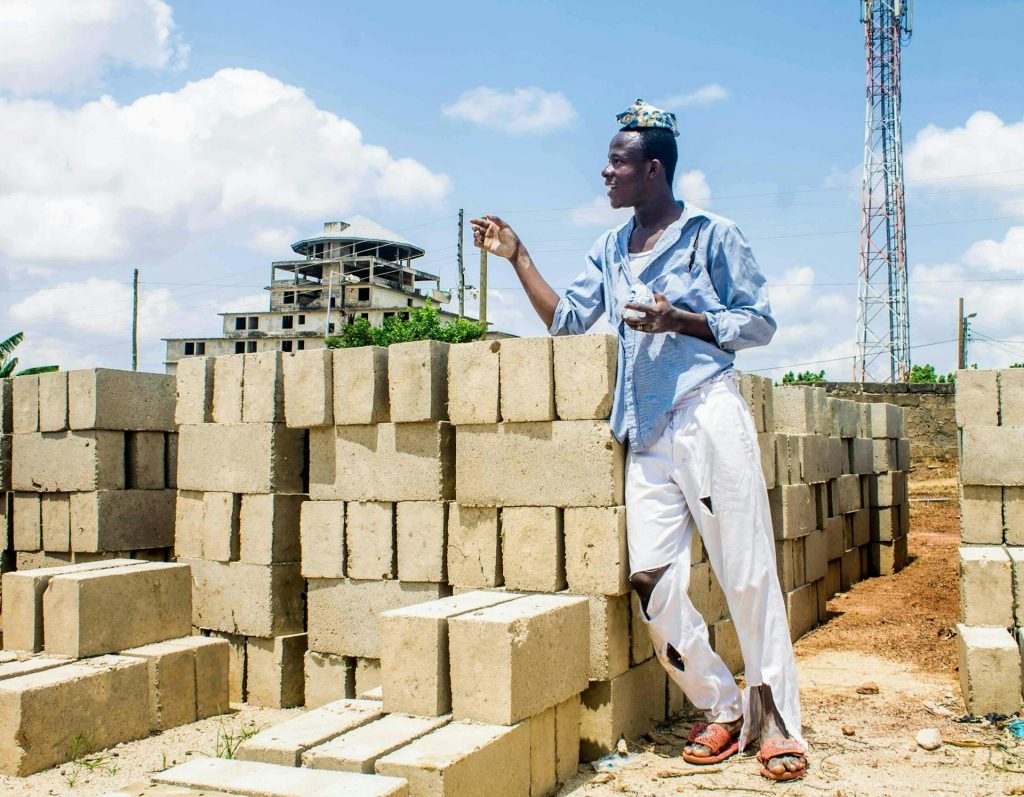
Let’s just say you’ve been thinking about how to build a house in Nigeria. You’ve got a piece of land somewhere or you’re about to acquire one. And somewhere in the back of your mind, you’re asking the same question every first-time builder in Nigeria always asks: Where do I even start?
Building your first house in Nigeria is one of the best financial decisions you will ever make because a house is an asset. A place you can call a home. A hedge against inflation. But, when done carelessly, It becomes one of the most painful and expensive mistake a person can ever make.
My name is Godswill Essien. I’m an architectural technologist and construction project manager, and I’ve worked on projects across Nigeria. This guide is everything I’d tell a client from day one.
The goal of this guide is simple: to show you exactly how to build a house in Nigeria and move from ideas and imagination to a completed, livable house in Nigeria without confusion, guesswork or unnecessary drama.
ALSO READ: Should I Build a Bungalow or a Duplex in Nigeria in 2026 –
I know you expected me to start with land, or design, or finding a contractor. But no. The very first step is sitting down with yourself and being brutally honest about money. Not what you hope to have or what your brother-in-law said it would cost. But what you actually have.
Ask yourself four questions, and don’t rush them:
Your answers will tell you more about your project than any architect or contractor will. From them, you’ll know whether a 3-bedroom bungalow or a 4-bedroom duplex is realistic. Whether you should build in phases. Foundation this year, roofing next year or go all in from the start. Whether you should begin now or wait six more months and save more money specifically for this project.
I’ve heard clients say things like, “I have ₦20 million, let’s just start”. That sentence is exactly how projects become abandoned. ₦20 million sounds like a lot of money until materials prices increase by 5% in a single month or your engineer realizes the soil isn’t so stable and needs a deeper foundation.
NOTE: I always advice clients to factor in a contingency fund of 10 to 20% into their budget when planning on how to build a house in Nigeria. Material prices in Nigeria are volatile. Site conditions and weather conditions can delay you. Design adjustments do happen mid construction and when all of these needs arises, you can always fall back to your contingency fund. That buffer isn’t pessimism; it’s professionalism.
If you already have land, skip ahead to Step 3.
In Nigeria, buying land is not simply a property transaction. It is a process that demands due diligence, professional input, and a detective’s mindset because in land transactions, all that glitters are not gold. deep scrutiny is neccessary.
Many first-time builders don’t lose money because the land was overpriced. They lose it because the land was never properly theirs to build on. They go ahead to buy or pay for a land without carrying out proper verification and due diligence.
I’ve read stories on the social media, watched different contents where people come out to say they were scammed by real estate agents and landowners. And that is why it became imperative that I bring up the issue of land acquisition in this article.
Before you pay a single kobo, insist on seeing and validating the title documents. Depending on the state, location and context, always make sure the title documents of the land or property is intact. This could be a Certificate of Occupancy (C of O), Right of Occupancy (R of O), Deed of Assignment, Gazette, or Excision. Whatever document yours comes with is a proof that your property is legal and secured.
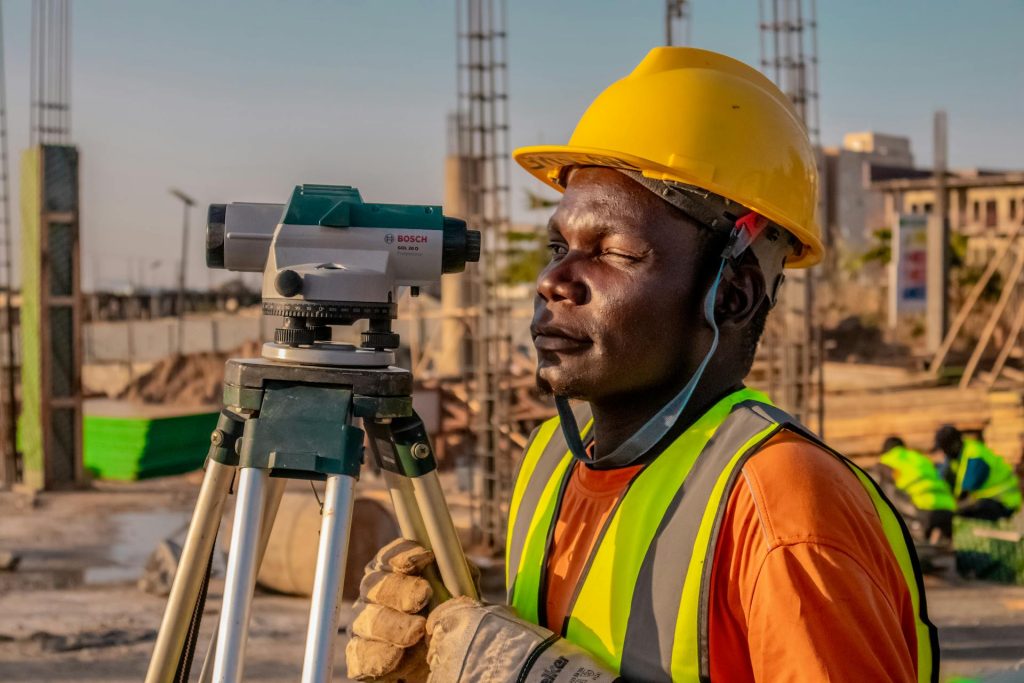
Have a registered surveyor cross-check the survey plan against what is physically on the ground. Confirm the land size, coordinates and make sure the land isn’t sitting inside a government acquisition zone or underneath a proposed government project location. These things happen more often than you think.
Beyond the paper, visit the land yourself. If possible, more than once. In different weathers and if you can take your architect or surveyor along. Walk the site and assess the drainage, topography, flood risk, access roads, and general character of the neighbourhood. Ask direct, uncomfortable questions about boundary disputes, family land complications, and overlapping claims. The infamous omo onile headaches that Lagos builders dread is largely avoidable when proper background checks happen before money changes hands.
Always verify through at least one of these:
Not all abandoned buildings in Nigeria tell a story of financial mismanagement. Some were stopped by court orders and injunctions because nobody checked the land properly before building began. Verification is non-negotiable.
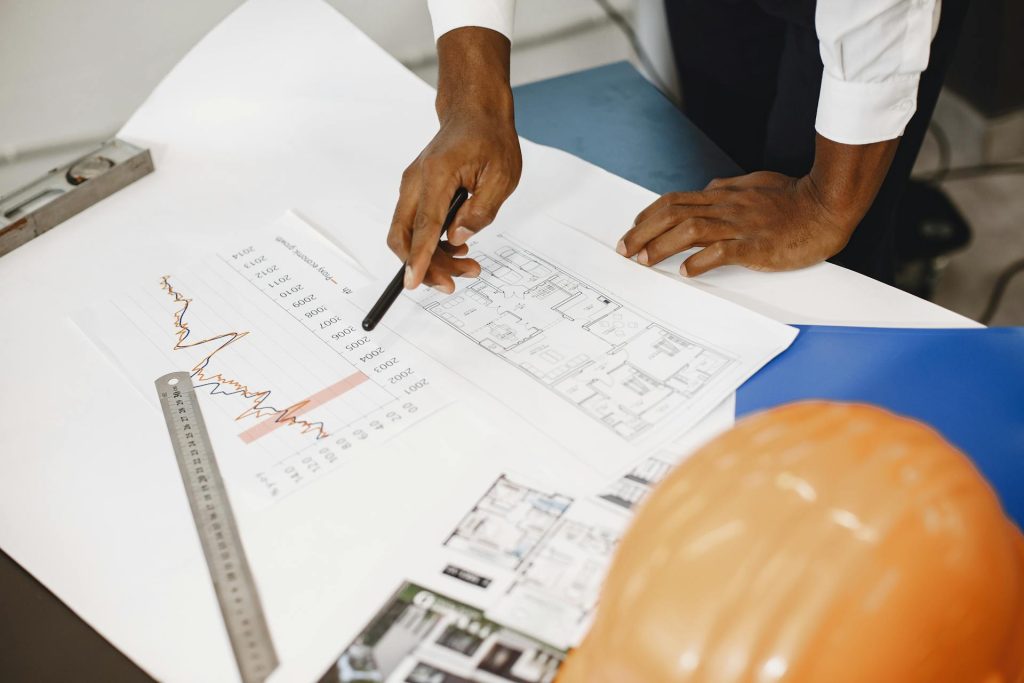
With land secured and verified, the next big question becomes: who do I actually need to hire? and this is where many people cut corners and where many projects quietly begin to fail.
Let me share with you a little real life experience.
In 2024, I had designed a 16 rooms student hostel for a client based in the U.S. I was contacted by the project engineer. I finished the design in two weeks and constuction started almost immediately.
One day, I was called to come and inspect the design that there’s been major changes. On getting there, I realize the person I saw wasn’t the engineer I knew. The new engineer according to hearsay is the client’s cousin and he had altered almost everything in the design without consulting me or asking questions. As I’m writing this, that project is still lying uncompleted.
The Nigerian construction industry is full of talented but unverified individuals calling themselves site engineers or experienced builders. Some are genuinely capable. Many are not. And by the time you get to find out which category yours falls into, you’ve already done your excavation and probably poured your foundation the wrong way.
The Architect:
Translates your vision into a functional, buildable design. Not just something that looks beautiful in a 3D render, but something zoned correctly for privacy, light, ventilation, and traffic flow and most importantly, a design that actually fits your budget. If your architect keeps designing a house you can’t afford to build, something needs to change.
Always make sure that whatever the architect is designing fits your budget. You can’t have a budget for 3bedroom bungalow and he’s giving you a design of a 5bedroom bungalow. Moreover, your budget will also reflect on the choices of materials. You can go for an Aluminum roofing sheet if working on a tight budget. But, if you have enough buffer, you can always go for a metro tile etc.
The Structural Engineer:
Think of every building like a human body. The flesh is visible; the bones hold everything up. The structural engineer designs those bones which comprises of the columns, beams, lintels, foundations and slabs.
Most building collapses in Nigeria are usually traced back to either the absence of a structural design or the failure to follow one. This is not optional. For me I do not take the services of the structural engineer for granted because they decide if a building will stand well or not.
The Quantity Surveyor:
The financial adviser and accountant of your project. He prepares the BOQ, monitors material usage, prevents waste, and makes sure your budget doesn’t quietly bleed out while the artisans smile and nod. The Q.s is very important.
The Builder / Site Engineer:
The professional who physically transfers your architect’s drawings from paper to ground. Works in close coordination with the architect and structural engineer to ensure what’s built matches what was designed. A good builder / site engineer should have the following attributes:
The Project Manager: Coordinates everything. Makes sure everyone is working and things are going as planned. He’s in charge of scheduling, procurement, quality control, artisan supervision, progress reports, cost tracking e.t.c. In most cases the PM is the client’s best friend because his mandate is simple: to make sure the client wins. On smaller projects, one person sometimes wears multiple hats. But every function must be covered by someone who knows what they’re doing.
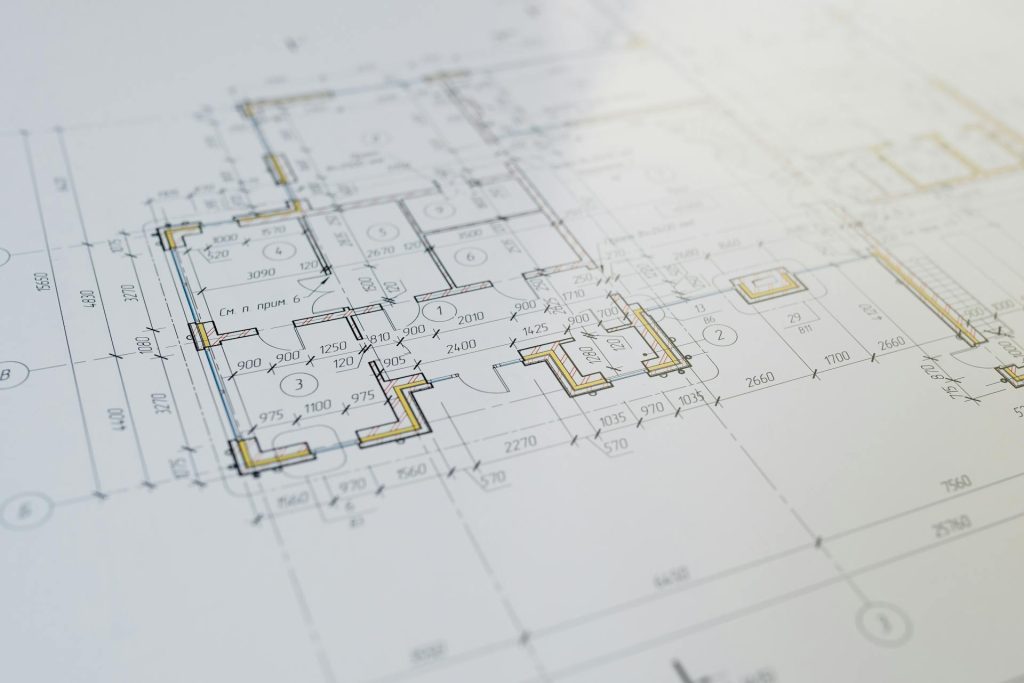
Here’s a rule I apply on every single project: nothing gets built until the drawings are complete, coordinated, and approved. I mean it. Not “almost done.” Not “we’ll figure out the plumbing later.” Everything concerning the design should be duly complete because it is the guide and map of the entire project. At minimum, your documentation package should include:
These aren’t just formalities. They are the difference between a controlled project and daily chaos on site. Complete drawings eliminate guesswork, prevent costly mistakes, support accurate pricing, and give you a legally defensible record of what was designed versus what was built.
They also form the basis for your planning approval submission which brings us to the next step.
Let me be a bit direct here. Most Nigerians often skip this step. I’ve seen it several times and you hear them saying things like “it’s my land, I paid for it in full, why should I go and beg the government before I build my own house?”
ALSO READ: Lagos Building Plan Approval in 2026 and Common Mistakes in the Building Approval Process Nigeria — And How to Avoid Every Single One
I understand the frustration. I genuinely do. But here’s what skipping approval actually means in practice:
Building approval confirms your structure is safe, compliant, and recognized by the state. Protects you from the government. Increases your property’s value and guarantees your peace of mind. To get your building approved you’ll need the following documents although the specifics vary by state and local authority, but you’ll typically need:
In some locations, environmental impact assessments and development contributions may also be required. A good project manager, architect or planning consultant can manage this entire process on your behalf.
Beyond compliance, approved drawings simplify your path to a Certificate of Occupancy later, support any future resale or refinancing, and reduce the risk of disputes with neighbours or government agencies. The authorities aren’t being obstructive here. At their best, they’re looking out for your safety and the integrity of your investment.
With approvals secured or still in progress, the project planning should commence before any physical work begins. This is where professional construction management comes into play. The planning should cover the scope, time, cost, quality, resources and risk associated with the project.
A realistic programme of works should be prepared, showing the sequence and approximate duration of major activities: site clearing, foundation, superstructure, roofing, first fix services, plastering, second fix services, tiling, painting, fixtures and external works. This does not have to be overly complex, but it should be clear enough that you and your project team can measure progress against it. Seasonal factors such as heavy rains should be factored in, especially for excavation, foundation and external works.
On the cost side, a cash-flow forecast should be prepared to match the construction programme. This helps you know when major disbursements will be required and allows you to align them with salary cycles, expected business inflows or financing arrangements. It also enables you to phase the project logically; for example, taking the building to roof level and stabilising structure before investing heavily in finishes.
To get this done properly you need a professional project manager but you can always reach out to the build with ease team for assistance.
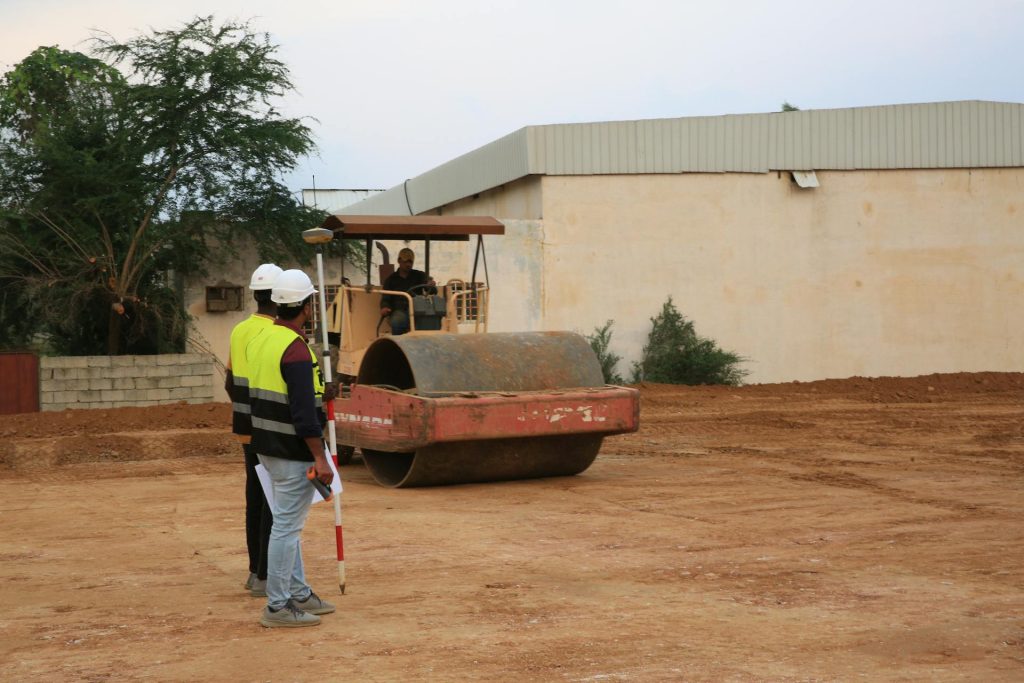
At last, the real work begins. Site preparation covers clearing of vegetation, removing debris, levelling key areas, and setting up basic site logistics like material storage, access routes and temporary worker facilities. After this comes the setting out which is the precise and accurate transfer of your building’s dimensions from drawings to the actual ground. Errors here distort everything that follows.
This must be handled by someone experienced either a licensed surveyor or a builder with a strong track record.
Excavation follows, dug to the depth and width specified in your structural drawings. The foundation type whether strip, pad, raft, pile depends on your soil conditions and the structural load. A simple soil investigation is cheap compared to what it prevents. After excavation, it’s time for blinding, reinforcement where applicable, concrete casting, foundation blockwork, backfilling, and the damp proof course which marks the end of the sub-structure.
The superstructure stage covers blockwork up to lintel and roof level, casting of lintels and ring beams as designed, installation of columns and beams for framed structures, and preparation for roofing. Quality of materials (cement, aggregates, reinforcement, blocks) and workmanship (alignment, jointing, curing) at this stage affects structural performance, aesthetics and long-term maintenance.
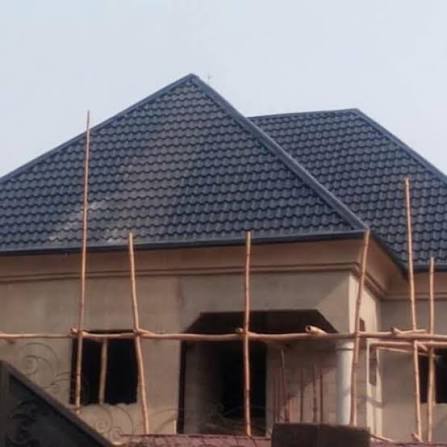
Once you hit roof level, you can breathe a little. The structural skeleton is standing. Now comes the covering and the character.
Roofing involves installing the roof structure: timber, steel, or a combination depending followed by the roof covering. Long-span aluminum sheets remain the most budget-friendly option and perform reliably in Nigerian weather. Stone-coated tiles offer more aesthetic appeal and longer lifespan but at a higher cost. Choose based on your actual budget, not aspirational aesthetics. A properly executed roof is your building’s shield try to get it right.
First-fix services come next: conduits, pipes, distribution boards, water lines, drainage lines all installed while walls are still accessible and can be chased. This is not the time to improvise. Follow the services drawings.
Then come the finishes, plastering, screeding, tiling, painting, doors, windows, sanitary ware, light fittings, kitchen fittings. This is the stage where budgets most often unravel. Finishing specifications should have been aligned with your budget from the design stage.
The discipline is this: choose durable, mid-range materials you can actually afford over imported finishes that force you to cut corners on the hidden things such as wiring, plumbing, waterproofing that nobody sees until something goes wrong.
The building is going up. Your team is on site. And now you’re tempted to believe everything is moving on well especially if you’re busy or based abroad only to check in when someone calls you.
Well, from previous experiences, I’ll advice you don’t get that comfortable.
You are the project owner, and you need to be properly informed about what’s happening at all times. Informed oversight is not optional. A professional monitoring approach includes planned site visits at key milestones, documented progress meetings, photographic records (dated and organized), formal stage approvals before proceeding to the next phase, and clear financial reporting.
Make sure the builder or site engineer maintains a strong daily progress report (DPR). This helps in tracking what’s done, how it was done, problems encountered, deviations and many others. With a strict DPR, you can always be in full control of what’s happening on your site.
If you’re in the diaspora or in another city, remote monitoring becomes your best tool.
Weekly video walkthroughs from site, dated photo logs, short written or voice reports, and milestone based payment can significantly reduce the risk of material diversion, substandard work, and quiet budget exhaustion. Your designated project manager on ground is your eyes. Make sure they’re someone you’ve verified, not just someone you trust.
Note: any variation from the original design must be documented, priced, and approved before it’s implemented not agreed casually over a WhatsApp voice note. That casual agreement is how scope changes and your budget exceeded.
You’re close. The finishes are done. The tiles are laid. Sanitary wares installed and this feels like the finish line. Yes, you’re almost at the finishing line. But not yet.
The final stage is snagging. The systematic process of identifying and correcting every defect, incomplete item, and non-conformity before you release final payments or move in. Walk through the entire building with your architect or project manager. Test every plumbing fixture. Check every electrical circuit. Open and close every door and window. Inspect every tile joint, every plastered surface, every painted wall.
Every defect gets recorded on a snag list and assigned to the responsible trade for correction. Nothing is too small to note. That door that doesn’t close flush will bother you every morning for years.
Where required by local authorities, a completion inspection may also be carried out to confirm the built structure aligns with approved drawings. Only after the snag list is cleared and key documents are handed over such as the as-built drawings, equipment warranties, certificates before final payments be released.
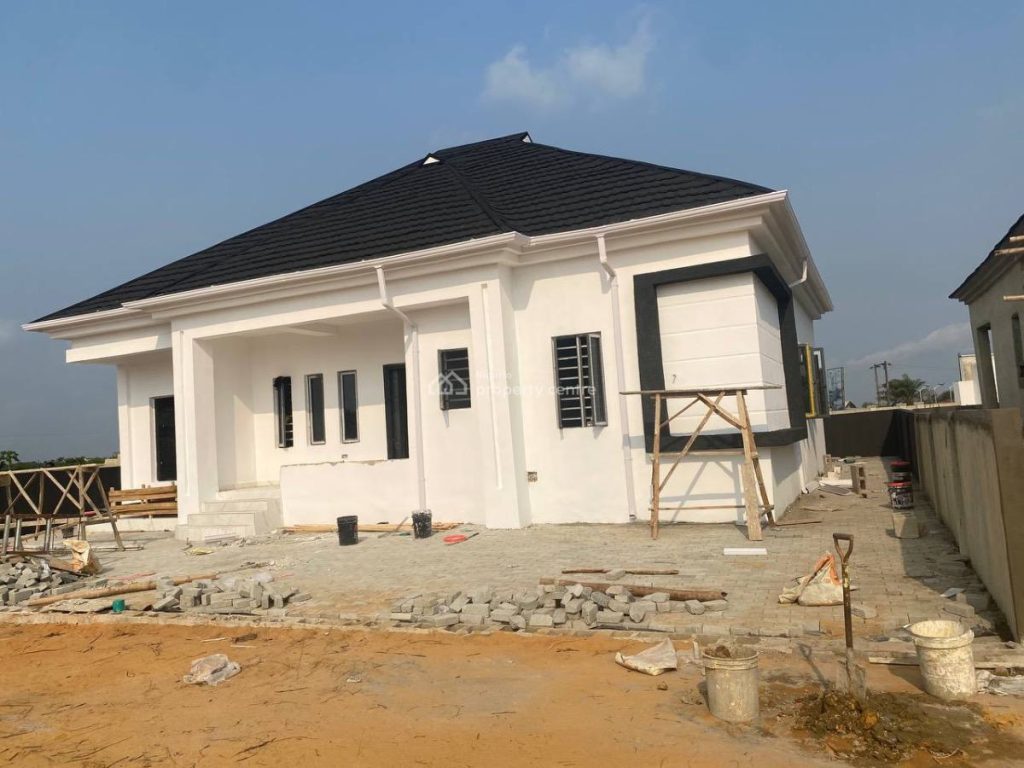
Build With Structure, Not with Hope
Building your first house in Nigeria is not magic. It’s not luck. And it’s definitely not something you figure out as you go. It is a sequence. Budget definition, land verification, the right professional team, complete documentation, regulatory compliance, planned execution, quality control, and a disciplined handover. Each step protects the one before it. Skip one, and the cracks and sometimes literal ones show up later.
The Nigerians who build successfully and move into homes they’re proud of are not necessarily the ones with the most money. They’re the ones who respected the process. Who asked the right questions early. The ones who hired professionals instead of going with “someone I know.”
You can be that person, just by reading this far.
Now go build something that lasts and if you need assistance contact our team for proper guidance and recommendations.
Have questions about any stage of the process? Drop them in the comments. Every question gets a read.
Disclaimer: Construction costs, regulatory processes, and material prices vary by state and project scope. Always engage qualified local professionals for advice specific to your site and circumstances.
Other related articles:
Cost To Build Bungalow Vs Duplex in Nigeria 2026
Labour Cost for Building a House in Nigeria 2026: Full Breakdown