Getting building approval in Nigeria sounds straightforward — until your application gets rejected, your site gets sealed, or your structure gets marked for demolition. Here's everything you're doing wrong (and how to fix it).
What are the most common mistakes in the building approval process in Nigeria?
The most common mistakes includes: starting construction without approved plans, submitting incomplete documents, using unapproved architectural drawings, ignoring land title verification, and skipping the development control inspection process. These errors can lead to fines, demolition orders, or complete project shutdown.
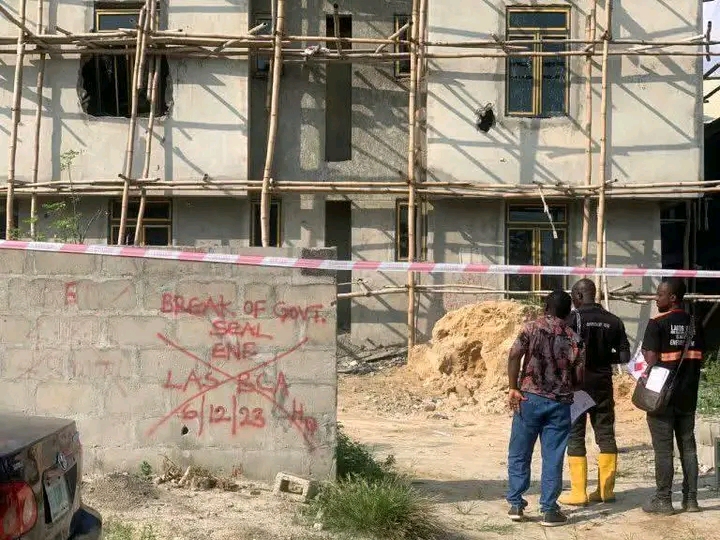
Your building can be demolished in Nigeria even after you’ve finished constructing it. Not because of bad engineering. Not because of poor materials. Simply because you didn’t follow the right steps in the building approval process in Nigeria.
That’s the part nobody tells you before you start and that’s why buildwithease exists.
Getting a building permit in Nigeria is one of the most skipped, most misunderstood, and most dangerously underestimated steps in the entire construction journey. People assume it’s just government paperwork. It’s not. It’s the legal foundation your entire project stands on, and if you get it wrong, everything built on top of it is at risk.
I’ve seen this destroy projects at foundation stage, at roofing level, and I’ve even seen completed buildings pulled down because the approval process was mishandled from the start.
I’ve worked in construction project management long enough to know that the permit stage is where most projects go sideways. So, in this post, I’m going to break down the most common and most avoidable mistakes people make during the building approval process in Nigeria, and exactly what you should do instead.
Let’s get into it.
Before we talk about mistakes, let’s quickly set the scene.
The building approval in Nigeria refers to the official legal procedure you must follow before constructing any structure be it residential, commercial, or industrial in Nigeria. It involves submitting architectural drawings, verifying your land title, paying the required fees, and getting a nod from the relevant state authority.
In Lagos, that authority is LASPPPA. The Lagos State Physical Planning and Building Authority. In Abuja, it’s the FCDA (Federal Capital Development Authority). Each state has its own equivalent.
The National Building Code 2006, managed by the Architects Registration Council of Nigeria (ARCON), provides the baseline standards all approvals must meet.
Simple in theory. Maddening in practice.
This is the big one. And it happens more than you’d think.
A lot of people in Nigeria begin laying foundations before the building plan approval even lands in their hands. The logic? “Let me start, then sort the papers later.” It feels efficient. It is not.
Can you start construction without building plan approval? No. You legally cannot. And beyond the legality, the consequences are severe.
Under Nigerian law, building without approved plans can result in:
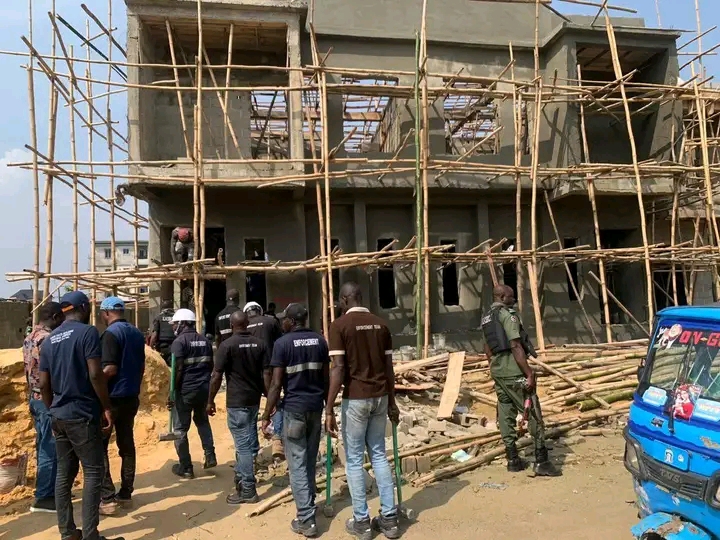
In Lagos, LASPPPA officials conduct regular enforcement sweeps. In Abuja, the FCDA is equally active. Neither is bluffing.
Always get your building permit before the first block touches the ground.
The second most common reason applications get rejected is incomplete submissions. People gather some of the documents but not all of them.
What documents are required for building approval in Nigeria?
Here’s a standard checklist:
| Document | Purpose |
|---|---|
| Approved Survey Plan | Confirms land boundaries |
| Certificate of Occupancy (C of O) or equivalent title document | Proves land ownership |
| Architectural Drawings (4 copies minimum) | Shows building layout and design |
| Structural Engineering Drawings | Confirms structural integrity |
| Mechanical & Electrical Drawings (for larger buildings) | Shows utilities layout |
| Environmental Impact Assessment (EIA) | Required in some states |
| Application Form (duly completed) | Official request form |
| Evidence of Payment of Application Fees | Required before processing |
| Tax Clearance Certificate | Required in most states |
Missing even one of these can get your entire application sent back and you’ll have to restart the queue.
Also read: Building Plan Approval in Lagos 2026
This one surprises people. In Nigeria, your building plans must be signed and stamped by a COREN-registered engineer and an ARCON/NIA-registered architect. Not just anyone with AutoCAD or revit skills.
Do I need an architect or engineer for the approval process? Absolutely yes.
If your drawings are prepared and signed by an unregistered professional, they will be rejected. Full stop. Worse, if something goes wrong structurally and your project used unapproved plans, you carry the full legal liability.
Always verify that whoever is drawing your plans has:
This is non-negotiable in 2026. The authorities are stricter than they were five years ago.
Before you submit a single document for building plan approval, your land title must be clean and verified.
How do you verify land title before applying for approval?
In Lagos, you can use the official Lagos State Lands Bureau portal at lands.lagosstate.gov.ng to verify a Certificate of Occupancy (C of O). In Abuja, the FCDA Land Administration handles title searches.
What you’re checking for:
Imagine submitting a full application, paying your fees, waiting months, only to discover your land has a government acquisition notice buried in a register somewhere. It happens. And it kills projects.
Verify the title first. Then apply.
Your building cannot simply be designed however you want. Nigerian planning regulations mandate setbacks. The required distance between your structure and the boundary of your plot, the road, or neighbouring structures.
The specific setback requirements vary by state and zone. In Lagos, for instance:
Violating these means your drawings will be rejected at the plan review stage. And if you’ve already started building based on wrong measurements, that section may have to come down.
Beyond setbacks, zoning determines what type of structure is allowed on a plot. You cannot build a factory in a residential zone, for example, no matter how much you paid for the land.
What are the fees for a building permit in Nigeria?
This is one of the most searched questions around the building approval process Nigeria and rightly so. The fees are not fixed nationally. They vary by state, plot size, building type, and number of floors.
Here’s a rough 2026 estimate for Lagos State:
| Building Type | Estimated Fee Range |
|---|---|
| Single-storey residential (up to 150sqm) | ₦150,000 – ₦400,000 |
| Bungalow or duplex (150–300sqm) | ₦400,000 – ₦900,000 |
| 2–3 storey building | ₦900,000 – ₦2,500,000 |
| Commercial building | ₦2,500,000 and above |
These figures cover application fees, site inspection fees, and development levy but they do not include what you pay your architect or the cost of preparing drawings. Factor those in separately.
Pro tip: Budget at least 10–15% above the quoted fee for miscellaneous charges that often emerge during processing.
How long does the building approval process take in Lagos?
Officially, LASPPPA targets a 4 to 8 week turnaround for straightforward applications. In practice? It often stretches to 3 to 6 months, sometimes longer, especially for complex buildings or when documents are returned for corrections.
Here’s a realistic breakdown:
Total: roughly 8 to 20 weeks in a best-case scenario.
Do not plan your construction schedule without accounting for this. Contractors don’t wait — and neither does your money sitting idle.
Look, I’ll be honest with you. The building approval process Nigeria is not a DIY situation. It’s bureaucratic, it’s document-heavy, and the requirements shift between states and even between local government areas.
Most successful applications I’ve seen go through without serious delays have one thing in common: a professional overseeing the process. Someone who knows which office to walk into, which officer to follow up with, and what exactly each department needs.
At Buildtracka, our construction project management team handles exactly this kind of project supervision and monitoring from the approval stage all the way through to completion. We take the paperwork, the back-and-forth, and the follow-ups off your hands so you can focus on the bigger picture.
If you’re building in Nigeria and you want someone in your corner from the permit stage onwards, reach out to us at Buildtracka. It’s better you avoid the mistakes than have to undo them.
Submitting your application is not the end. It’s more like the beginning of a waiting game that rewards the persistent.
Applications that sit untouched are often applications that nobody followed up on. The process in Nigeria, Lagos especially, involves multiple departments: zoning, structural review, environmental, and site inspection. Each one can become a bottleneck.
What to do:
Getting your building plan approval is a win. But it’s not a blank cheque to build whatever you feel like afterwards.
If your approved drawings show a 2-bedroom bungalow and you quietly add a third room mid-construction, that’s a violation. It can result in an enforcement notice, additional fines, or requirements to pull down the unapproved addition.
Any significant change to your approved design must be submitted as an amendment before or during construction. This is called a building plan amendment application, and it goes through a similar process to the original submission.
Build what was approved. Amend what you want to change. Don’t assume nobody is watching.
What happens if your application gets rejected?
First, don’t panic. Rejection doesn’t always mean denial. Most of the time, it means your documents had issues that need correcting. The authority will typically issue a query letter specifying exactly what was found wanting.
Your steps:
If you believe the rejection was unjust or arbitrary, you have the right to appeal formally to the state’s planning tribunal or the relevant ministry. ARCON’s office can also be a useful point of escalation in some cases.
| State/Zone | Approving Authority |
|---|---|
| Lagos State | LASPPPA (Lagos State Physical Planning and Building Authority) |
| Abuja (FCT) | FCDA — Federal Capital Development Authority |
| Oyo State | Oyo State Lands Bureau |
| Rivers State | Rivers State Urban and Regional Planning Board |
| Other States | State Ministry of Physical Planning / Urban Development |
Planning to build in Nigeria? These articles will walk you through the full picture:
The building approval process Nigeria is not the enemy. It’s a system and like all systems, it rewards those who understand how it works.
The mistakes in this list aren’t rare. They happen to first-time builders, to experienced developers, and even to people who’ve built before but in a different state. The rules shift. The fees change. The enforcement gets stricter every year.
The best thing you can do in 2026 is go in prepared, go in with the right professionals, and go in with your documents airtight.
If you need a trusted team to guide your project through the approval stage and beyond, Buildtracka is here for exactly that. We offer professional project supervision and monitoring services across Nigeria, so your build doesn’t just get approved, it gets done right.
Build with people who know the terrain.
About the Author: This article was written by a certified construction project manager and founder of Buildtracka, a Nigerian construction project management firm specialising in project supervision, monitoring, and delivery for residential and commercial builds across Nigeria.
Did you find this useful? Share it with anyone planning to build in Nigeria — they’ll thank you later.