Thousands of Nigerian buildings stand uncompleted today simply because the client or financier ran out of money. Here's exactly how to make sure your project doesn't become an abandoned project.
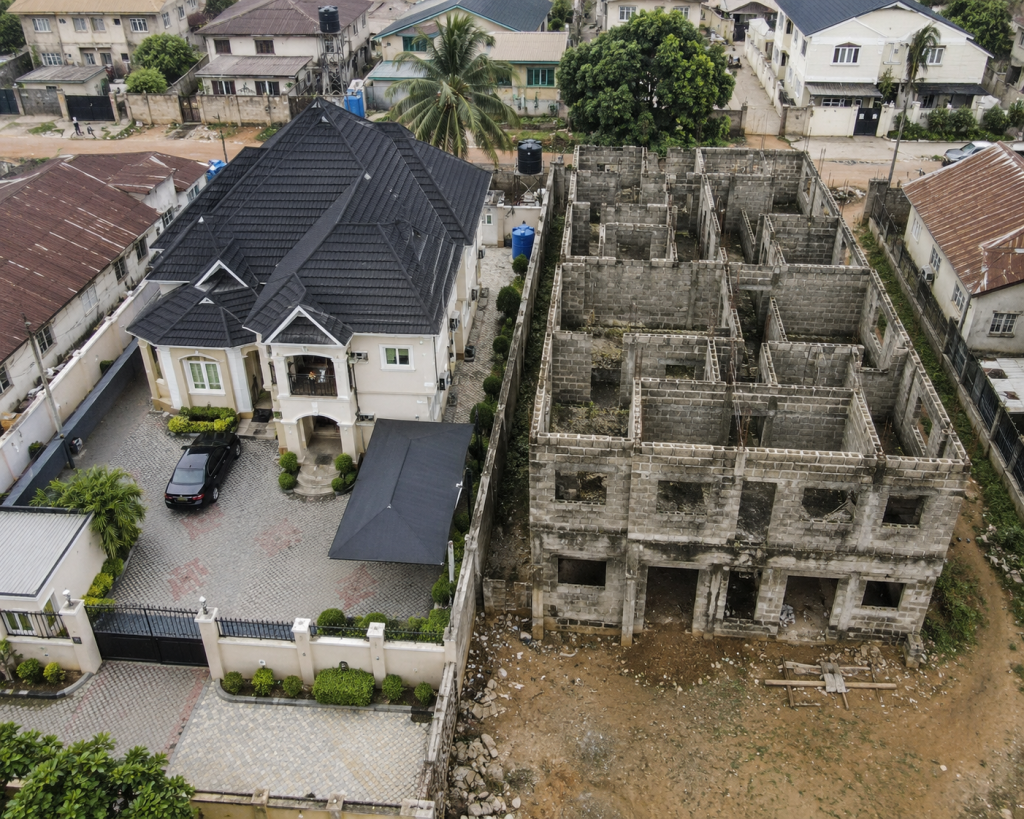
Drive through any Nigerian city. Lagos, Abuja, Port Harcourt, Enugu and you’ll see various kinds of unfinished building projects. Roofless walls. Half-plastered columns standing uncovered under the sun, under the rain. Foundations that have been sitting empty for three years.
Nigerians call them uncompleted buildings. But from my personal experience as a construction project manager, a vast number of these stalled projects can be traced back to budget failures.
If you’re building a house in Nigeria in 2026 or planning to, the most important thing you can do is read this before you kickstart that project. Because avoiding running out of money while building in Nigeria is not about luck. It is about making the right decisions before, during and after construction.
Here are the 10 most effective strategies curated from my personal experience working on Nigerian projects, with real 2026 numbers, honest examples, and the mistakes most Nigerians make that you don’t have to.
To avoid running out of money while building your house in Nigeria, you need to do three things consistently:
Everything else in this guide builds on these three foundations.
Buildwithease 2026
Before we talk solutions, let’s be honest about the problem. Because if you understand why buildings stall, you’ll understand exactly what to guard against.
The four most common causes of construction budget overruns in Nigeria are:
| Mistake | What Actually Happens |
|---|---|
| Starting without a full financial plan | Project stops at lintel level when savings run dry |
| Underestimating the real building cost | Contractor’s early quote was 40% below actual cost |
| Changing the design halfway through | New plan means new materials, new labour, new timeline and the budget effectively doubles. |
| Ignoring inflation and price changes | Last year’s cement price is irrelevant; this year’s is what matters |
There’s a fifth one that nobody talks about enough: starting with only enough money to lay the foundation.
This is probably the single most common mistake that destroys building budgets in Nigeria. You have ₦3M. The foundation costs ₦3M. So, you start thinking that more money will come. Sometimes it does. Very often it doesn’t, not at the pace construction demands. And the building sits in wait as a result.
Don’t start with foundation money. Start with building money.
The first and most powerful way to avoid running out of money while building in Nigeria is to know with precision, how much your house will actually cost.
Not a guess. Not a contractor’s rough estimate over the phone. A real number.
In 2026, the cost of construction in Nigeria runs at approximately:
| House Type | Estimated Cost (2026) | Lagos/Abuja Premium |
|---|---|---|
| 3-bedroom bungalow | ₦35M – ₦65M | Add 20–30% |
| 4-bedroom duplex | ₦75M – ₦150M | Add 20–30% |
| Cost per square metre | ₦250,000 – ₦450,000 | Location-dependent |
These are construction costs only. They exclude land, perimeter fence, landscaping, furnishing, and generator.
The most accurate way to get your real number is to get a Bill of Quantities (BOQ) from a registered quantity surveyor before construction begins. The BOQ lists every item, every bag of cement, metre of iron rod, square metre of tiling, with current market unit costs and quantities. It gives you a real budget, not a hopeful one.
Without a BOQ, you’re starting a journey without knowing how far the destination is.
Related: How to Build a House in Nigeria Step by Step: From Land to Keys (2026)
This is non-negotiable. And yet it is the rule most Nigerians break. Many of the people I’ve seen thinks they can start once the foundation money is ready. To them, the other funds will come as the project progresses. That sounds reasonable only when you have constant inflow of cash and you’re planning to build in phases. But when, there’s no constant cash coming in, an uncompleted building will surely be birthed.
Construction is not a slow trickle of expenses. It arrives in waves. The structural stage alone demands blocks, iron rods, cement, labour which can consume 30–35% of your entire budget in a matter of weeks. If that money isn’t ready when the structural stage arrives, work stops. And stopping a Nigerian construction site is not free. You lose labour, momentum, and sometimes you lose the contractor altogether.
The rule: Have 60–70% of your full project cost secured in your account or accessible within 30 days before breaking ground. This covers you through the most expensive phases, foundation through roofing without financial panic.
The remaining 30–40% can be assembled during the finishing stage, which is slower and more flexible.
Let’s have the honest conversation about hiring a quantity surveyor in Nigeria to avoid budget overruns.
A lot of Nigerians skip the QS to save money. That is penny-wise, pound-foolish. Truly.
A registered quantity surveyor does four things that protect your money:
QS fees in Nigeria in 2026: 1.5–3% of total project cost. On a ₦50M build, that is ₦750,000 to ₦1.5M. In almost every case, that fee is recovered within the first few months of construction through savings the QS identifies.
The question is not whether you can afford a quantity surveyor. The question is whether you can afford to build without one.
Related: Quantity Surveyor Fees in Nigeria 2026 — What You Should Actually Pay
If there is one number you take from this entire article, let it be this: add 15–20% to your total budget estimate as a contingency reserve before you begin.
Not 5%. Not “I’ll figure it out.” 15–20%.
Building in Nigeria in 2026 is demanding. Material prices move with the dollar rate, diesel costs, and general market pressure. A bag of cement that costs ₦12,500 today can cost ₦15,000 by the time you need it for roofing. Iron rods, roofing sheets, tiles are all subject to the same volatility.
Your contingency fund is not a luxury. It is the buffer between a stalled building and a completed home.
| Contingency Level | When It’s Appropriate |
|---|---|
| 10% | Locked-price contract + registered QS tracking every spend |
| 15% | Standard residential build with BOQ and professional supervision |
| 20% | Diaspora clients, self-managed builds, informal contractor arrangements |
| 25%+ | Complex designs, difficult terrain, or periods of sharp naira volatility |
Critical rule: I always advice my clients to ring-fence the contingency in a separate account from day one. Do not allow your contractor access to it. Do not use it for planned expenses. It exists for genuine surprises only.
Building in phases in Nigeria is one of the most practical and underrated strategies for completing a house without running out of funds. And yet most people resist it because it feels slow.
It’s not slow. It’s strategy.
Here’s how phased building typically works for a 3-bedroom bungalow:
Each phase pause is a financial breathing point. You save, prepare, and price-check materials for the next phase, and you continue with fresh funds rather than borrowed momentum.
The key insight from experienced Nigerian builders: Get the roof on as quickly as finances allow. A roofed building is protected. An open building with exposed blocks, fresh plaster, and uncovered floors deteriorates every rainy season. Rain does real, measurable, expensive damage to an uncompleted structure.
Building gradually in Nigeria without running out of funds works best when each phase has a clearly defined scope, a stage budget, and a completion target. Don’t begin phase two until phase one is fully funded and paid for.
This one is hard to hear. But it needs to be said directly.
Changing your design halfway through construction in Nigeria is one of the most expensive things you can do.
It is also extremely common.
You see a neighbour’s bay window and decide you want one. You visit a show house in Lekki and fall in love with the open-plan kitchen. Your wife changes her mind about the master suite. These feel like small changes. They are not small changes.
Every mid-construction design alteration means:
One significant design change mid-build can add 10–25% to your total project cost overnight. In naira terms on a ₦60M project, that is ₦6M–₦15M you didn’t budget for.
Avoid design changes mid-construction in Nigeria by spending more time and money at the design stage before construction begins. Review your architectural drawings thoroughly. Walk through the 3D rendering or floor plan with your family. Ask every “what if” question before you begin construction, not after.
Related: How Much Architects Charge in Nigeria in 2026 (With Real Examples)
Here is a strategy that experienced Nigerian builders swear by but rarely write about. But I’m willing to share them with you.
Instead of keeping your construction savings in a bank account waiting for the next stage, buy and stockpile materials gradually as you save. Particularly items with long shelf life like iron rods, roofing sheets, electrical conduit pipes, tiles, sanitary ware.
Why does this matter?
Because in Nigeria, cash loses value faster than building materials do. A naira sitting in a savings account earning 4–8% annual interest is being eroded by inflation running significantly higher. Meanwhile, those iron rods you bought six months ago at ₦620,000 per tonne might be selling for ₦750,000 today.
Buy materials gradually, is not just a smart financial strategy. It is inflation protection for your building project.
Practical notes:
If you hand a contractor ₦10M upfront and say “call me when it’s done,” you have just created a significant financial risk for yourself.
The professional standard for contractor payment schedules in Nigeria is milestone-based:
| Payment Stage | When Released | % of Contract Sum |
|---|---|---|
| Mobilisation | Before work begins | 20–30% |
| Foundation complete | After DPC level, verified | 20–25% |
| Structural work complete | After lintel/roof level, verified | 20–25% |
| Roofing complete | After waterproofing, verified | 10–15% |
| Finishing/handover | On completion and snagging | 10–15% |
Each payment is released only after physical verification that the previous stage is genuinely complete by you, your site supervisor, or your project manager. Not by the contractor’s word alone.
This structure keeps the contractor financially motivated to complete each stage. It also means that if a contractor performs poorly or abandons the job, you have not handed over money for work not yet done.
Document every agreement in writing. A signed contract or letter of engagement no matter how simple provides far more protection than a verbal agreement, however friendly.
We covered this in detail in our guide on how weekly budget tracking helps Nigerians build successfully, but it’s worth restating here because it is that important.
Weekly cost tracking for construction in Nigeria is your early warning system. Nigerian material prices move week to week. Contractors can inflate purchase quantities in the time between your monthly check-ins. Labour costs drift upward in peak season without formal notice.
The Friday review habit 15–30 minutes every week is the simplest, most effective thing you can do to protect your budget:
A ₦200,000 overrun caught in week one is a conversation and an adjustment. That same overrun unnoticed for eight weeks is a ₦1.6M budget hole with compounding consequences.
Planned vs. actual spending construction Nigeria track it weekly, not monthly. No exceptions.
This is especially important for diaspora Nigerians building from the UK, US, Canada, or elsewhere but it applies equally to Lagos-based professionals who visit the site once a month.
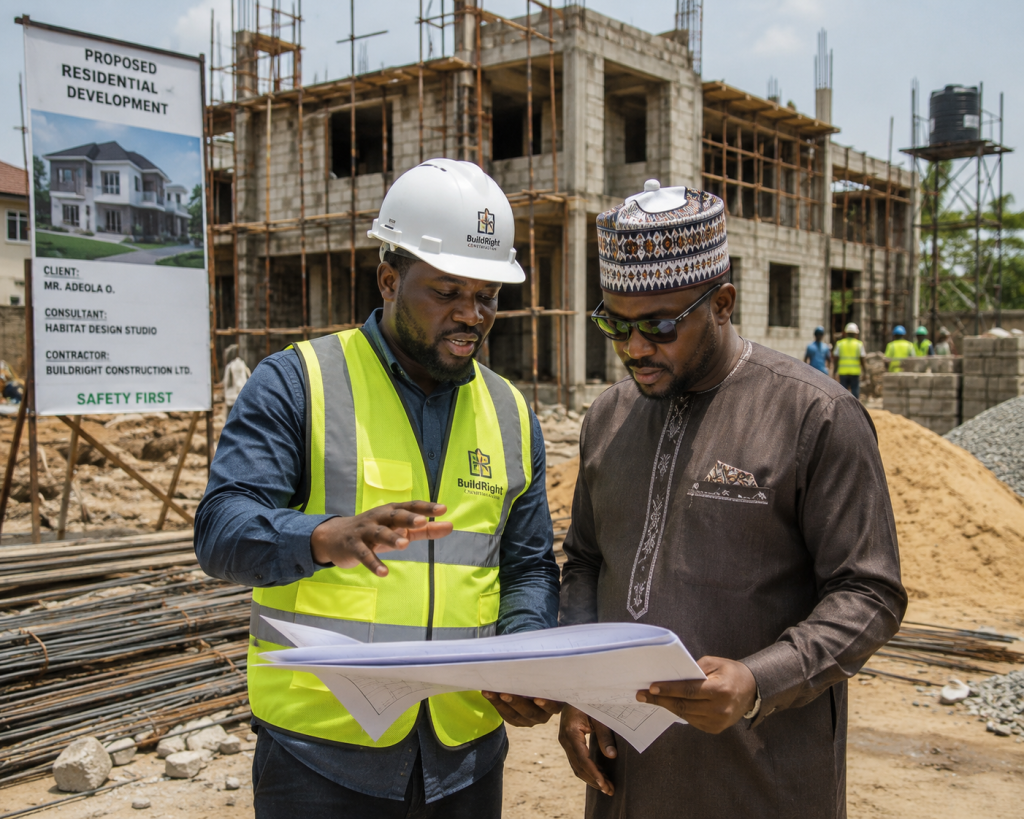
You cannot effectively protect a construction budget from a distance without eyes on the ground. The contractor knows this. And the longer your absences, the more room there is for costs to drift through inflated material quantities, unverified deliveries, or slow progress that you’re still paying for.
What independent professional supervision provides:
The cost of professional project supervision is almost always recovered in savings and overrun prevention within the first stage of construction.
Here they are, in one place:
| S/N | Rule | Why It Matters |
|---|---|---|
| 1 | Get a BOQ before you start | Real costs, not guesses |
| 2 | Have 60–70% of budget secured before breaking ground | Covers the most expensive stages |
| 3 | Hire a quantity surveyor | Fee recovered in savings every time |
| 4 | Set a 15–20% contingency fund and lock it | Buffer for price spikes and surprises |
| 5 | Build in phases | Financial breathing room between stages |
| 6 | Finalise your design before construction starts | Changes mid-build add 10–25% to costs |
| 7 | Buy materials gradually, not cash | Inflation protection for your investment |
| 8 | Use milestone-based contractor payments | Keeps contractor accountable; protects your funds |
| 9 | Track expenses every week, not monthly | Catches overruns before they compound |
| 10 | Get independent eyes on site | The single best protection for absent owners |
The honest answer, based on 2026 market conditions:
If you’re in the diaspora and converting from GBP, USD, or CAD, plan your exchange rate conservatively. Budget at a rate 10–15% weaker than current, to account for naira movement during the build period.
If you don’t yet have 60% secured, the right move is not to start and hope. The right move is to continue saving while using that time to get your architectural drawings done, your planning permit approved, and your BOQ prepared. That way, when your funds are ready, you hit the ground running.
Related: Cost of Building a Bungalow vs. Duplex in Nigeria (2026) — Full Comparison
Saving on a Nigerian building project is possible. But it’s not about buying cheaper cement or negotiating your architect down to nothing. That’s how you get a house with structural problems in year three.
Legitimate ways to save cost while building a house in Nigeria:
What you should not do to save money:
How can I avoid running out of money while building my house in Nigeria? Get a BOQ before starting. Secure 60–70% of your full budget before breaking ground. Track spending weekly. Set a 15–20% contingency fund and don’t touch it until genuinely necessary.
What percentage should I allocate for a contingency fund in Nigerian construction? 15–20% above your base construction estimate in 2026. With ongoing naira volatility and material price fluctuations, 10% is the minimum and only appropriate for projects with locked-price contracts and professional QS oversight.
How do I budget construction costs accurately in Nigeria? Commission a Bills of Quantities (BOQ) from a registered quantity surveyor. Allocate: foundation 15–20%, structure 30–35%, roofing 10–15%, finishing 30–40%, plus 15–20% contingency. Use 2026 market rates.
What are the biggest mistakes that cause people to run out of money building in Nigeria? Starting without a complete financial plan, underestimating total cost, changing the design mid-build, ignoring weekly price changes, starting with only foundation money, and paying contractors in large upfront lump sums without milestone verification.
Should I hire a quantity surveyor to avoid budget overruns in Nigeria? Absolutely. For any project above ₦30M, a QS is not optional. it’s insurance. Their fee (1.5–3% of project cost) is almost always recovered in savings from overcharge prevention and BOQ-based procurement within the first few months of construction.
Why do so many buildings in Nigeria remain uncompleted? The three core reasons: starting without adequate funds, no professional oversight, and design changes mid-build. Most uncompleted buildings trace back to one of these three root causes.
How do I avoid changing the design halfway through construction? Invest more time and money at the design stage before construction begins. Review architectural drawings thoroughly ideally in 3D with all decision-makers present. Price changes before committing to them. Once construction starts, treat the design as locked unless there’s a compelling structural reason to change it.
The Nigerians who complete their buildings on budget, without years of stalling, without the heartbreak of an uncompleted structure are not the ones with unlimited money. They’re the ones who planned properly, tracked consistently, and protected their budget at every stage.
You don’t have to figure this out alone.
Buildtracka is a Nigerian construction project management firm that helps homeowners, first-time builders, property developers, and diaspora clients build with clarity and control. We provide on-ground weekly supervision, BOQ verification, contractor accountability, and real-time reporting so your money goes where it’s supposed to go, and your building gets finished.
Talk to a Buildtracka Project Manager Today
Also read: