
Lagos just raised Governor's Consent fees by up to 300% in 2026. Here's the full land acquisition process in Nigeria and what it actually costs you now."
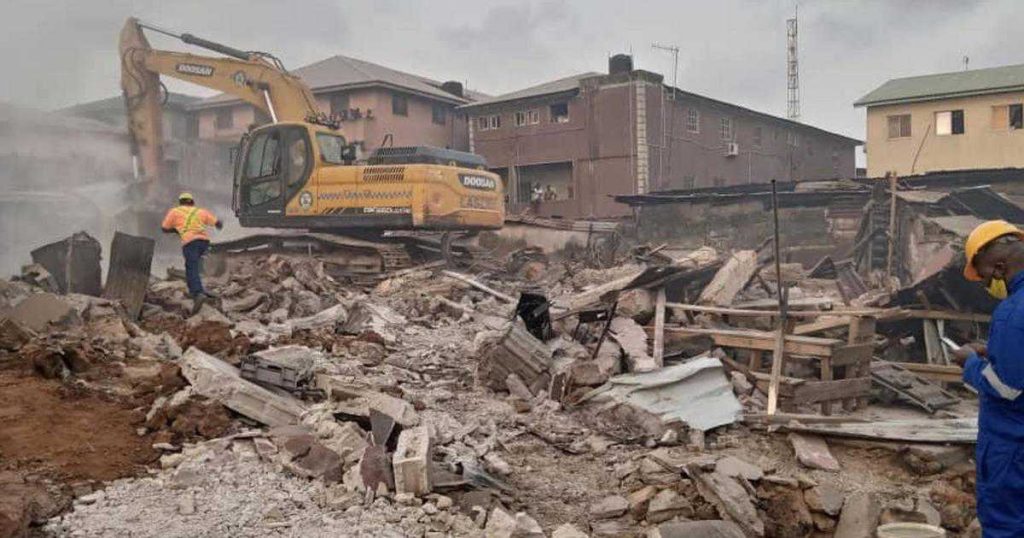
The land acquisition process in Nigeria involves seven core legal steps and skipping even one of them is the reason why some people have spent their entire building budget on court cases and many are now in serious debt and bankruptcy as a result.
In 2026, Lagos State revised its land valuation benchmarks so sharply that the Governor’s Consent fees in premium districts jumped by as much as 300–500%, which means the cost of getting this process wrong (or right) has never mattered more.
If you’re buying land anywhere in Nigeria, be it Lagos, Abuja, Port Harcourt, or planning your first home back home from London, Houston, Toronto, or Johannesburg, I want you to take this guide seriously as I walk you through the entire land acquisition process in Nigeria, step by step, in plain English, with the documents, costs, and timelines that matter in 2026.
Quick answer: The land acquisition process in Nigeria involves seven core steps: defining your purpose for the land, conducting due diligence and a title search, physically inspecting the land, negotiating and signing a Deed of Assignment, applying for Governor’s Consent, paying stamp duty and registration fees, and finally registering the title at the Land Registry. The full process can take anywhere from a few weeks to over a year, depending on the state and how clean the title already is.
Land ownership disputes in Nigeria tend to fall into a handful of recurring patterns, and knowing them is the fastest way to spot trouble before you pay:
This isn’t unique to any one city or income bracket. It happens in Lagos, Abuja, and Port Harcourt alike, and it happens to buyers who did some homework, not just the ones who skipped it entirely which is exactly why each step below matters, not just the ones that feel obviously important.
Step 1: Define your purpose and run a feasibility check.
Residential, commercial, or mixed-use land in Nigeria comes with different zoning rules depending on the state. A plot zoned for agriculture won’t automatically let you put up a duplex, no matter how good the location looks. Confirm the land use classification, whether the area is genuinely growing, and whether the size and shape fit what you actually want to build.
Step 2: Conduct due diligence and a title search.
This is the single most important step in the entire land acquisition process in Nigeria, and it’s the one most people rush. It includes a Land Registry search (confirms who the land is registered to and whether it’s free of encumbrances), charting at the Surveyor-General’s office (confirms whether the land falls within government-acquired areas, right-of-way, or setback zones), and boundary confirmation on the ground.
Step 3: Verify ownership and physically inspect the land.
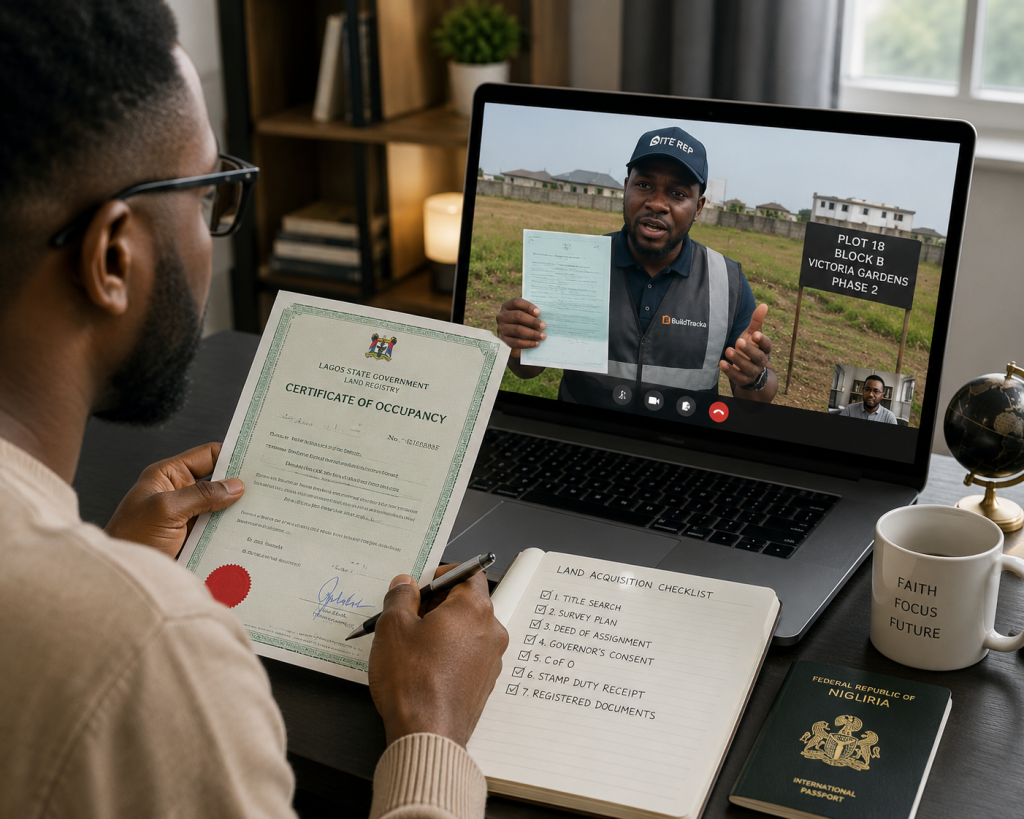
Documents can lie. Visit the site yourself or send someone you trust who isn’t the agent selling it to you. Talk to neighbours. Ask the local community leadership if there’s any dispute history. For diaspora buyers who can’t be there physically, this is where working with a project manager or verified local representative stops being a luxury and becomes essential.
Step 4: Negotiate and sign the Deed of Assignment.
Once the land checks out, the seller prepares a Deed of Assignment which is the legal document that transfers ownership from seller to buyer. It should clearly state the parties involved, the property description, and the purchase price, and be signed with witnesses present. Don’t confuse this with a Certificate of Occupancy. A Deed of Assignment transfers ownership; a C of O is the government’s official title document confirming it.
Step 5: Apply for Governor’s Consent.
Under Nigeria’s Land Use Act, all land in a state is technically vested in the Governor, so any transfer of land legally requires Governor’s Consent to be valid. This is also where most of the delay in the land acquisition process in Nigeria happens because consent can take weeks to well over a year depending on the state and how complete your documentation is.
Step 6: Pay stamp duty and registration fees.
Once consent is granted, the Deed of Assignment needs to be stamped and then registered at the Land Registry. Fees vary by state and are calculated as a percentage of assessed land value, so always confirm current rates before budgeting.
Step 7: Register the title.
The final step is registration where your Deed of Assignment is officially recorded at the Land Registry, making your ownership a matter of public record. This protects you if the same seller tries to sell that plot to somebody else next year. It’s also the step people skip when they’re trying to save money, and it’s the one that costs them the most when things go wrong.
| Document | Why You Need It |
|---|---|
| Certificate of Occupancy (C of O) or Governor’s Consent | Confirms legal title |
| Deed of Assignment | Transfers ownership from seller to you |
| Registered Survey Plan | Confirms exact boundaries and land size |
| Evidence of Stamp Duty Payment | Legal requirement for document validity |
| Land Registry Search Report | Confirms the land is free of disputes/encumbrances |
| Charting Report (Surveyor-General) | Confirms land isn’t within a government acquisition zone |
Costs vary significantly by state, but Lagos, Nigeria’s most active property market gives a useful, well-documented benchmark. As of the 2026 “Blue Book” revision (effective May 1, 2026), Lagos updated its official land valuation benchmarks for the first time since 2015, and the government-facing statutory charges are calculated as a percentage of that assessed value, not the price you actually paid.
| Fee | Typical Rate (Lagos, 2026) |
|---|---|
| Governor’s Consent fee | ~1.5% of assessed value |
| Capital Gains Tax | ~0.5% of assessed value |
| Stamp duty | ~0.5% of assessed value |
| Registration fee | ~0.5% of assessed value |
| Aggregate government charge | ~3% of assessed value |
| Legal/professional fees (separate) | Typically 5–10% of transaction value |
Because Lagos raised its assessed Fair Market Value benchmarks so sharply in 2026, the naira amount behind that 3% has increased dramatically in premium districts. In some Lekki and Ikoyi transactions, total title perfection costs have reportedly jumped several hundred percent compared to the old 2015 benchmarks. Other states calculate consent and registration fees differently, and generally move slower on documentation, so always confirm current figures with your specific state’s Land Registry or a property lawyer before budgeting.
Realistically, anywhere from a few weeks for a clean title with cooperative registries, to well over a year where Governor’s Consent, documentation gaps, or state backlogs slow things down. Lagos and Abuja tend to have more structured (though still slow) systems; some states move faster on paper but require more manual follow-up.
If someone promises you land acquisition “in one week, fully perfected,” that’s not efficiency, that’s a red flag.
Yes. Foreign nationals can acquire land in Nigeria under the Land Use Act, typically through leasehold arrangements, and may need additional state-level approvals. Diaspora Nigerians face no such restriction as citizens, but distance creates its own risk like you can’t inspect the land yourself, chase documents in person, or “just drive down” when something feels off. This is exactly why so many diaspora buyers now work with a construction project manager, property lawyer or trusted representative on the ground to handle verification, follow-up, and site supervision while they’re abroad.
| Resource | What It Helps With |
|---|---|
| Land Registry (state-level) | Confirms registered ownership and encumbrances |
| Surveyor-General’s Office | Charting confirms the land isn’t in a government acquisition zone |
| VerifyLand | GIS-based digital land verification for titles, survey plans, and history |
| LandSight | Multi-layer verification covering title, ownership, and risk history |
| Property/land lawyers (e.g. via NBA referral) | Title search, Deed drafting, Governor’s Consent processing |
| Nigerian Investment Promotion Commission (NIPC) | Official government resource for foreign investors and land guidelines |
Verifying land you can’t physically visit is where most diaspora land purchases go wrong. If you’re buying from abroad:
This is exactly where Buildtracka Integrated Services fits in. For clients especially diaspora Nigerians building remotely, Buildtracka coordinates due diligence, site verification, and integrates land acquisition into your overall project budget and timeline, so you’re not juggling lawyers, surveyors, and contractors separately.
What is the first step in the land acquisition process in Nigeria? Defining your purpose for the land and running a feasibility check on land use, zoning, and suitability before you commit any money.
How do I verify that a land seller truly owns the land in Nigeria? Conduct a title search at the Land Registry, a charting exercise at the Surveyor-General’s office, and physically inspect the land to confirm boundaries and current occupation.
Which documents are required to acquire land legally in Nigeria? Certificate of Occupancy or Governor’s Consent, Deed of Assignment, registered survey plan, and evidence of stamp duty and registration payment.
What is Governor’s Consent and why is it important? It’s the Governor’s approval required under the Land Use Act to fully perfect your title. Without it, your ownership remains legally exposed.
How long does the land acquisition process in Nigeria take? Typically several months to over a year, depending on the state and how quickly consent, stamping, and registration are completed.
What are the common risks in land acquisition in Nigeria? Fake documents, multiple sales of the same land, unresolved family disputes, government reacquisition, and unregistered or unsurveyed titles.
Can foreigners acquire land in Nigeria? Yes, usually through leasehold arrangements under the Land Use Act, with additional approvals depending on the state.
What is the difference between a Deed of Assignment and a Certificate of Occupancy? A Deed of Assignment transfers ownership between buyer and seller. A Certificate of Occupancy is the government’s official title document confirming that ownership.
Is it necessary to engage a lawyer for land acquisition in Nigeria? Yes. A property lawyer should handle the title search, contract of sale, Deed of Assignment, and title perfection to protect you from fraud.
How much does land acquisition cost in Nigeria in 2026? Government-facing statutory fees (consent, stamp duty, registration) typically run around 3% of assessed value in Lagos, plus separate legal fees of 5–10% of transaction value. Other states vary. Always confirm current rates locally.
How do I avoid buying “fake land” in Nigeria? Verify the title at the Land Registry, confirm the survey plan at the Surveyor-General’s office, inspect the land physically, and work with reputable lawyers or verification platforms.
What is the role of the Land Use Act in land acquisition in Nigeria? It vests all land in each state in the Governor and governs how land is acquired, used, and transferred, making Governor’s Consent central to a valid title.
The land acquisition process in Nigeria rewards patience and punishes shortcuts. Buildtracka Integrated Services brings the Clarity, Control, and Cost Efficiency this process rarely comes with by default. Verifying land, coordinating documentation, and managing acquisition alongside your actual build, is an entire job on its own and that is why you need a professional project management company to assist you.
Read next:
Build With Certainty. Build With Buildtracka.