The Elephant Cement bag on your site still says Lafarge but the company behind it doesn't exist anymore. Here's what the HBM Nigeria name change actually means for your build, your budget, and your bags of cement.
Lafarge Africa Plc no longer exists as a company name as it officially became HBM Nigeria Plc in June 2026, after Chinese building materials group Huaxin completed a $1 billion acquisition of the majority stake previously held by Switzerland’s Holcim Group.

If you’re mid-build, sourcing cement, or just saw “HBM” on an invoice where you expected “Lafarge” and started worrying, this is the article that answers exactly what changed and what didn’t.
I watched the relaunch ceremony and then i had to do my due diligence as a construction project manager and discovered that the plants are the same, the Elephant Cement brand isn’t going anywhere yet, and the company itself says quality and operations are unaffected. But there’s more nuance worth understanding if you’re actively building in 2026, especially around pricing, which is exactly where things are genuinely in motion right now.
The name change is a corporate ownership change, not a change in factories, staff, or according to the company, product quality. Existing share certificates, warranties, and business relationships remain valid under the new name.
This is the question every homeowner and contractor is actually asking, so let’s answer it directly: according to HBM Nigeria’s own statements at its June 2026 rebrand launch, the transition does not affect product quality, business operations, or the workforce. The company’s Group Managing Director, Lolu Alade-Akinyemi, told stakeholders that HBM Nigeria remains “focused on delivering quality cement, concrete, aggregates, and innovative building solutions” as before.
Practically, here’s what that means on site:
If you’re mid-project and your supplier’s delivery notes or receipts now say “HBM Nigeria” instead of “Lafarge Africa,” that’s expected, it’s the same manufacturer under new ownership, not a different or unverified company.
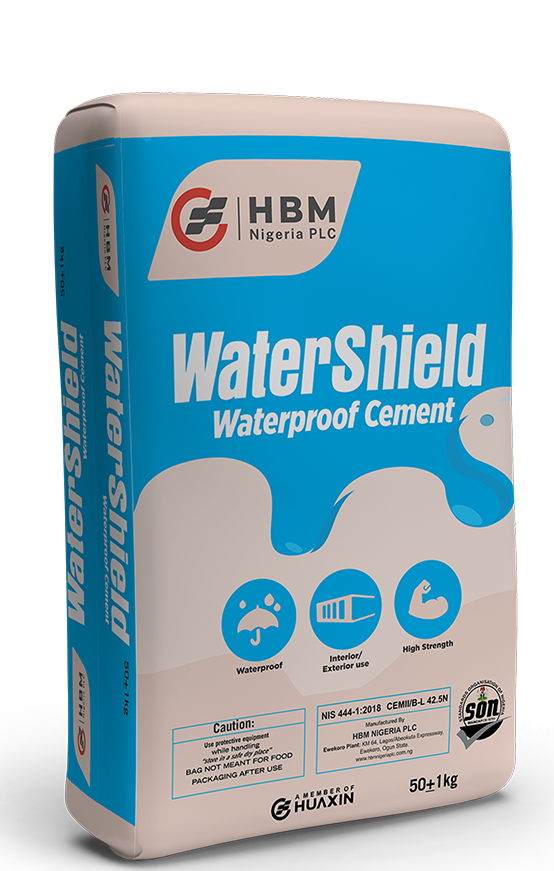
This is where builders should actually pay attention, because it’s genuinely unresolved. At the same June 2026 event where the rebrand was unveiled, Nigeria’s Minister of Works, Sen. David Umahi, publicly told HBM Nigeria and other cement manufacturers to reduce their prices, citing the strain rising cement costs are putting on contractors and infrastructure projects. The Federal Government announced it would begin formal engagement with cement manufacturers on pricing from July 1, 2026.
So the honest picture for anyone budgeting a build right now:
If you’re planning material procurement for the coming months, build in some flexibility rather than locking in a fixed cement budget based on old pricing and check current rates close to your purchase date rather than relying on a quote from earlier in the year.
See also: Cement prices in Nigeria today
Not about the name change itself. Corporate rebrands following an ownership change are common and don’t, on their own, signal instability. HBM Nigeria remains publicly listed on the Nigerian Exchange, reported over ₦1 trillion in 2025 revenue as Lafarge Africa, and has publicly committed to expansion, including additional capacity at Sagamu and Ashaka through 2026 and into 2027.
What’s actually worth watching as a builder isn’t the rebrand, it’s the broader cement pricing conversation the rebrand happened to coincide with. Keep an eye on cement prices over the next few months as government engagement with manufacturers plays out, and don’t assume “HBM Nigeria” on a receipt is anything other than the same company you already knew.
Here’s the ownership story in plain terms: in December 2024, Holcim Group, the Swiss building materials company that had controlled Lafarge Africa agreed to sell its 83.81% majority stake to Huaxin Cement, a Chinese cement group headquartered in Wuhan, China, and one of the ten largest cement producers in the world. The deal, valued at roughly $1 billion, was completed in August 2025.
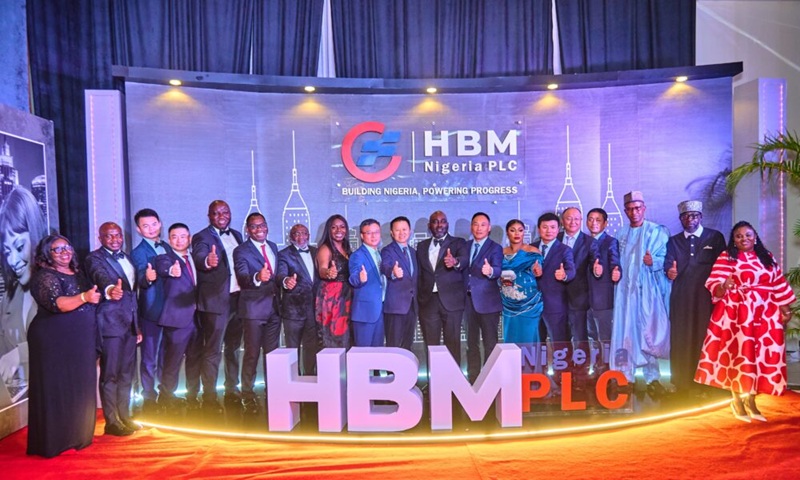
Shareholders approved the resulting name change to HBM Nigeria Plc with HBM standing for Huaxin Building Materials at the company’s Annual General Meeting on April 30, 2026. The Corporate Affairs Commission issued the updated Certificate of Incorporation shortly after, and the new identity was formally unveiled at a public event in Lagos in June 2026, attended by government officials including the Minister of Works Sen. David Umahi.
Notably, Huaxin wasn’t a stranger to this business before the deal as the Chinese firm had been one of Holcim’s own largest shareholders for over two decades (1999–2024), giving it deep familiarity with Holcim’s operations, safety culture, and assets going into the acquisition.
HBM Nigeria isn’t a new company, it’s the fourth name in the 67-year history of one of Nigeria’s oldest industrial businesses. Understanding that lineage helps explain why the brand still feels familiar even with a new name on the door.
| Era | Name | Years | What Happened |
|---|---|---|---|
| 1 | West African Portland Cement Company (WAPCO) | 1959–2008 (49 years) | Founded as a joint venture between Blue Circle Industries (UK), the United Africa Company, and the Western Region government. First kiln lit at Ewekoro in December 1960; listed on the Nigerian Stock Exchange in 1979; became Nigeria’s largest cement producer by 2004. |
| 2 | Lafarge Cement WAPCO Nigeria Plc | 2008–2014 (6 years) | Renamed after France’s Lafarge SA became majority shareholder (having acquired Blue Circle Industries in 2001), formally reflecting the French parent’s brand. |
| 3 | Lafarge Africa Plc | 2014–2026 (12 years) | Created when Lafarge and Holcim merged globally, consolidating WAPCO’s Nigerian assets with Lafarge’s South African operations. Later absorbed Atlas Cement (Port Harcourt) and UNICEM (Calabar) in 2017. |
| 4 | HBM Nigeria Plc | 2026–present | Renamed after Huaxin Cement (China) completed its $1 billion acquisition of Holcim’s 83.81% stake, formally announced in June 2026. |
The Elephant Cement brand, the one most Nigerian builders actually recognize on the bag has survived all four corporate identities and remains the company’s flagship bagged cement product till date.
Is Lafarge cement still available in Nigeria? Yes, the same manufacturer is producing cement under the new name HBM Nigeria Plc, and the Elephant Cement brand continues as before.
Has cement quality changed since the HBM Nigeria rebrand? According to the company, no. HBM Nigeria has stated the transition does not affect product quality, factories, or workforce, only the corporate ownership and name.
Why did Lafarge Africa change its name to HBM Nigeria? Because Huaxin Cement, a Chinese building materials group, completed an $1 billion acquisition of Holcim’s 83.81% majority stake in Lafarge Africa in August 2025. Shareholders approved the resulting name change with HBM standing for Huaxin Building Materials in April 2026.
Will cement prices go up because of the ownership change? The ownership change itself doesn’t directly set prices. However, the Nigerian government publicly pressured HBM Nigeria and other manufacturers to reduce cement prices at the June 2026 rebrand event, with formal engagement on pricing beginning July 1, 2026, so prices are an active, developing situation worth monitoring, not something the rebrand alone determines.
Who owns HBM Nigeria now? Huaxin Cement (Huaxin Building Materials), a Chinese cement group founded in 1907 and headquartered in Wuhan, holds the controlling stake previously held by Holcim Group.
Where does HBM Nigeria still manufacture cement? The same locations as before: Ewekoro and Sagamu in Ogun State, Ashaka in Gombe State, and Mfamosing in Cross River State, with ready-mix operations in Lagos, Abuja, and Port Harcourt.
What was the company called before Lafarge? West African Portland Cement Company (WAPCO), founded in 1959, the name most older Nigerian builders and engineers still associate with the Elephant Cement brand.
If you’re in the middle of a project, there’s no action needed on your end because of the name change alone. Your existing supply relationships, quotes, and material specifications carry over. Where it does matter is budgeting: with cement pricing under active government scrutiny in mid-2026, it’s worth checking current rates close to your actual purchase date rather than assuming last quarter’s numbers still hold, and building a small buffer into your materials budget until the pricing conversation settles.
This is exactly the kind of shifting-cost tracking that trips up self-managed builds and diaspora clients who can’t check current site prices themselves. Buildtracka Integrated Services brings the Clarity, Control, and Cost Efficiency to keep your material budget accurate as market conditions change.
Read next:
Build With Certainty. Build With Buildtracka.