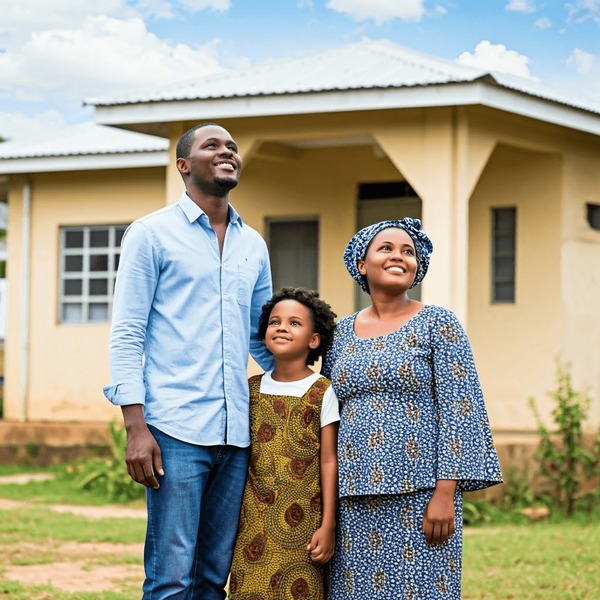
With ₦20 million in 2026, you can build a modest 2–3bedroom bungalow in most states outside Lagos and Abuja, including basic finishing.
Can ₦20 million actually build a house in Nigeria in 2026? With ₦20 million in 2026, you can build a modest 2–3bedroom bungalow in most states outside Lagos and Abuja, including basic finishing. In Lagos or Abuja, the same budget covers a shell structure only. Finishing would require an additional ₦8M–₦15M.
My name is Godswill Essien, a construction project manager with the sole aim to help people build with clarity, zero chaos and still remain on budget. Welcome to buildwithease!
Building on a budget doesn’t mean cutting corners for cheaper options as some people would think. It means maximizing value per naira spent, making smarter decisions about materials, design, labour, and timing.
In 2026, the Nigerian construction landscape looks like this:
It depends heavily on location, materials, and your contractor or builder and for people building with a tight budget, I’ll always advice you seek the services of a construction project manager to help you track, guard and monitor your build.
Now let’s dive a bit further because here’s where smart builders win. When looking to build on a budget, the material choices you make during planning can save you millions.
This part right here; this is where people lose the most money.
Here’s a truth that nobody loves to hear but I’ll still say anyways. Afterall the essence of this blog is to help you make informed decisions about your build. The cheapest contractor is almost never the best choice. The guy who quotes you ₦800k less than everyone else is usually the one who disappears when the foundation cracks. Professionals know their worth and they’re a bit expensive compared to the cheaper ones. Now here’s the thing. Hiring certified professionals will always give you peace over hiring a quack.
What to do instead:
Before you proceed into the full construction stage of your project, you need paperwork. Skip this and you’re gambling with your entire investment.
Key approvals typically include:
1. Building Plan Approval from your state’s Urban and Regional Planning authority
2. Environmental Impact Assessment (required in some states for larger builds)
3. Survey Plan of your land
4. Certificate of Occupancy (C of O) or equivalent title document
Costs vary by state. In Lagos, plan approval alone can run ₦150,000–₦500,000. In Abuja, the process through FCDA can be more structured but equally important.
Don’t skip this. Structures built without approval can be demolished and the government won’t be liable for it.
Is Interlocking Brick Really Cheaper Than Sandcrete Blocks?
Short answer: Yes, when you factor in total build cost.
On a per-block basis, interlocking bricks at ₦250 vs. sandcrete at ₦350 is already a saving. But the bigger saving is in mortar. Sandcrete construction uses huge quantities of cement-mortar between every row of blocks. Interlocking bricks don’t. That alone can save you multiple bags of cement per square metre of wall.
Plus, because the build is faster, labour costs drop too. Your workers finish sooner, and you pay fewer daily wages.
The math is genuinely compelling. If you’re building a bungalow and you haven’t spoken to an interlocking brick supplier, make that call this week.
How Long Does It Take to Build a Low-Cost House in Nigeria?
Another question with a frustrating “it depends” answer but let’s be a bit specific.
A standard 3-bedroom bungalow with experienced workers typically takes: If you can dedicate ₦20M upfront and keep the contractors moving continuously, you can finish a solid bungalow in under 6 months.
This is the part of the journey that breaks people but it is important I point it out so you can plan for them ahead and not be overwhelmed when they finally show up.
Water supply: Water is one of the most vital resources you need to have on site. Whoever came up with the theory “water is life” wasn’t joking at all. You need water for mixing, curing, washing and virtually everything on site so it’s a must have and you ought to plan for it.
Site security: theft of materials is real, especially iron rods, nails, stirrups and roofing sheets. Endeavour to have a security guard on your site to ensure all materials are well protected against theft.
Generator fuel: if you’re using power tools or need lighting you’ll definitely need a generator and to run the generator, you must buy fuel so budget for it.
Unforeseen ground conditions: sometimes the soil surprises you, requiring deeper foundations and this cost more than expected reasons why you must always have a contingency plan to cover up for these unforeseen circumstances.
Price hikes mid-build: cement and rods are volatile; prices can jump 20% in a month.
Informal “settlement” fees: in some communities or areas you’ll have youths storm your site to demand for a development levy or they shutdown your site. Always have this at the back of your mind.
Transportation of materials: Not every seller or supplier handles logistics for the goods you buy from them. Some are priced separately from purchase.
To add to everything I’ve said so far, budget an extra 10–15% contingency on top of your main estimate. Think of it as insurance. If you don’t use it, great.
Your roof is not where you want to make the worst compromise but you also don’t have to overspend.
For a ₦20M build, aluminum long-span roofing is the sweet spot. It looks clean, lasts well, and won’t embarrass you at all.
Here’s a simplified budget flow for a ₦20M 3-bedroom bungalow (excluding land, in a mid-range Nigerian city):
1 – Foundation & Substructure: ₦2M–₦3M
Excavation, hardcore, concrete, DPC, block work below floor level.
2 – Walling to Roof Level: ₦3M–₦5M
Blocks, iron rods, ring beam, window/door frames.
3 – Roofing: ₦1.5M–₦2M
Trusses, roofing sheets, gutters.
4 – Finishes: ₦4M–₦7M
Plastering, screeding, tiles, painting, doors, windows.
5 – Services: ₦1M–₦2M
Electrical wiring, plumbing, septic tank.
Contingency (10% – 15%): ₦2M–₦2.5M
This is achievable within ₦20M in most non-Lagos locations with smart decisions.
In Lagos and Abuja, expect 20–40% higher across the board.
Yes. But only if you respect the process.
Building on a budget in Nigeria in 2026 means being the kind of person who researches before spending, who questions every material choice, who vets their contractor like they’re hiring a business partner, and who builds a contingency fund into the plan before anything else.
It’s not glamorous work. But the moment you move into a home you built; that you planned, it hits different.
Start with a design that matches your budget, not your dreams. You can read about Architect fees in Nigeria for more clarity. Get your permits i.e your building plans approval. Watch the cement market. And for the love of everything, don’t pay your contractor in full upfront.
Have questions about building on a budget? Drop them in the comments. We read every one.
Disclaimer: Prices quoted reflect market data as of early 2026 and may vary by location and supplier. Always get multiple quotes before committing to any purchase.
Building a house is simple only when you plan well.

Great content
Thank you very much for your honest feedback. Kindly drop your email if you want to be getting more contents like this as soon as they drop.
please I will appreciate more details for 3 or 4 bedroom duplex or terrace houses
we will be glad to do that. Please send an email to buildwitheasehq@gmail.com