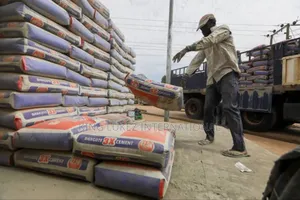
Dangote cement is currently ₦10,500–₦12,500 per bag across Nigeria in 2026. See full brand comparisons, state-by-state rates, when to buy in bulk, and which brand is best for block moulding, plastering, or concrete.
If you’re planning a construction project in Nigeria right now, knowing the current cement price in Nigeria is not a small detail. It is the foundation of your entire budget. Cement is one of the top three cost drivers in any Nigerian building project, and a swing of just ₦500 per bag across 600 bags is ₦300,000 gone from your pocket.
My name is Godswill Essien and I’m an architectural technologist turned construction project manager. I’ve worked on a couple of projects across Abuja and Owerri including The Defense HQ Events Centre, Asokoro and my dream is to see everyone build with clarity, control and on budget.
As of 2026, a 50kg bag of cement in Nigeria retails between ₦9,500 and ₦12,500 depending on the brand, state, and point of purchase. Dangote typically sells between ₦10,500–₦12,500, BUA between ₦8,500–₦10,500, and Lafarge between ₦8,500–₦10,500.
Here’s a cleaner breakdown:
| Brand | Bag Size | Retail Price Range (2026) | Best For |
|---|---|---|---|
| Dangote Cement | 50kg | ₦10,000 – ₦12,500 | General construction, concrete, columns |
| BUA Cement | 50kg | ₦8,500 – ₦10,500 | Block moulding, plastering, finishing |
| Lafarge Elephant Supaset | 50kg | ₦8,500 – ₦10,000 | Block making, sandcrete production |
| Lafarge Powermax | 50kg | ₦9,000 – ₦10,500 | Structural & heavy contractor work |
| Lafarge SRC | 50kg | ₦9,500 – ₦11,000 | Coastal/sulphate-exposed construction |
Note: Prices above reflect prevailing market rates across major Nigerian cities as of early 2026. Always confirm with your local supplier or depot on the day of purchase. Cement pricing is sensitive to fuel costs, haulage, and factory supply levels.
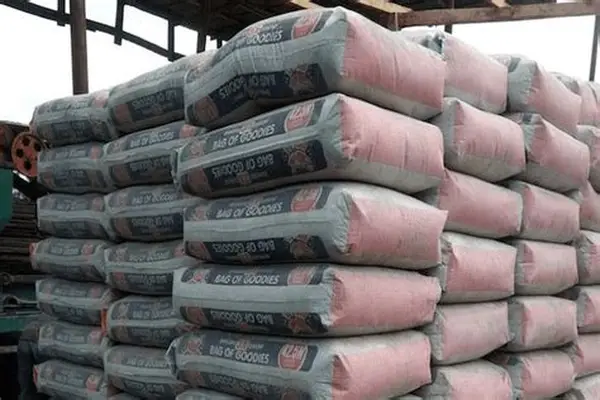
The price of cement per bag in Nigeria in 2026 ranges from ₦7,500 to ₦11,000 depending on three things: the brand, where you’re buying, and how many bags you’re buying at once.
Here’s what that actually looks like on the ground:
If you’re seriously building, not just patching a wall, buying in bulk from a depot always wins. The savings per bag don’t look like much until you multiply it by 300 to 600 bags.
Want to understand your total construction budget better? Check out our guide on the cost of building a bungalow vs duplex in Nigeria to see how cement fits into the bigger picture.
Dangote Cement is Nigeria’s market leader and probably the most recognizable name in construction here. They operate some of the largest cement plants on the continent, and that scale gives them a pricing edge though it doesn’t always translate to the cheapest bag at your local dealer.
| Location | Retail Price (Per Bag) | Wholesale Price (Per Bag) |
|---|---|---|
| Lagos | ₦10,500 – ₦12,000 | ₦9,500 – ₦11,500 |
| Abuja (FCT) | ₦10,500 – ₦12,500 | ₦10,000 – ₦11,500 |
| Port Harcourt | ₦9,500 – ₦12,000 | ₦9,000 – ₦11,500 |
| Kano | ₦9,000 – ₦11,500 | ₦8,500 – ₦10,500 |
| Ibadan | ₦9,500 – ₦11,500 | ₦9,000 – ₦10,500 |
| Enugu | ₦10,000 – ₦12,000 | ₦9,500 – ₦11,500 |
Dangote also supplies 1.5-tonne jumbo bags and bulk tanker deliveries for industrial-scale projects which is useful if you’re running a large housing estate or commercial development.
Pro tip: Dangote is generally the most widely distributed brand in Nigeria, which means supply shortages are rarer and delivery timelines are more predictable, and this is a serious advantage when you’re mid-construction.
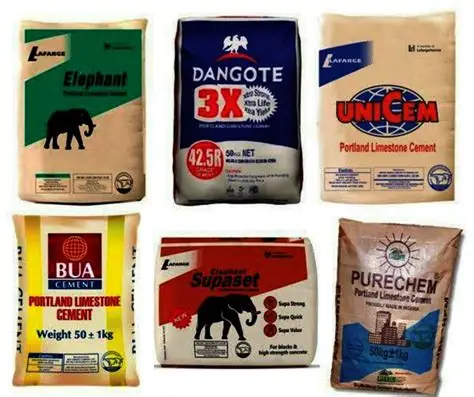
BUA Cement has been quietly winning market share in Nigeria with a compelling mix of competitive pricing and solid product quality. If you’ve heard builders say, “BUA is cheaper but still good,” that reputation isn’t accidental. The company has actively positioned itself as the high-yield, high-strength, fast-setting choice for everyday Nigerian builders.
| Location | Retail Price (Per Bag) | Wholesale Price (Per Bag) |
|---|---|---|
| Lagos | ₦7,800 – ₦8,500 | ₦7,300 – ₦8,000 |
| Abuja (FCT) | ₦8,200 – ₦9,000 | ₦7,700 – ₦8,500 |
| Port Harcourt | ₦8,000 – ₦8,800 | ₦7,500 – ₦8,300 |
| Kano | ₦7,500 – ₦8,200 | ₦7,000 – ₦7,800 |
| Ibadan | ₦7,700 – ₦8,400 | ₦7,200 – ₦7,900 |
| Enugu | ₦8,100 – ₦8,900 | ₦7,600 – ₦8,400 |
BUA produces CEM II cement. A Portland Limestone Cement formulation that Nigerian builders have found particularly effective for block moulding, plastering, and concrete works. The finer particle size gives better workability, and the faster set time is handy when you’re under deadline pressure.
If you’re comparing BUA to Dangote purely on price, BUA typically comes in ₦300–₦700 cheaper per bag across most markets. On a 600-bag project, that’s a potential saving of ₦180,000–₦420,000. That’s not nothing.
Lafarge (operating as Lafarge Africa) is the most diverse cement producer in Nigeria in terms of product range. While Dangote and BUA largely offer general-purpose cement, Lafarge has specialized products for different construction applications which is why their price ceiling tends to be higher.
| Product | Type | Price Range (Per Bag) | Best Application |
|---|---|---|---|
| Elephant Supaset | Portland Limestone (CEM II) | ₦8,500 – ₦10,000 | Block moulding, precast, sandcrete |
| Elephant Cement / WAPCO | General Purpose | ₦8,200 – ₦9,500 | General building works |
| Powermax | High Strength | ₦9,000 – ₦10,500 | Heavy structural, contractor work |
| SRC Cement | Sulphate-Resistant | ₦9,500 – ₦11,000 | Coastal, waterlogged sites |
| Lafarge Etex | Specialised | ₦9,000 – ₦10,200 | Roof tiles, specialised production |
Elephant Supaset is the most popular Lafarge product for residential builders. It’s specifically designed for block making and sandcrete applications, and it’s the one you’ll most often find at building materials markets across Nigeria.
Lafarge Powermax is the choice for more demanding structural work. Think columns, beams, and raft foundations where strength grade really matters. And if you’re building near a coastline or on a site with high sulphate content in the soil, Lafarge SRC is worth the price premium.
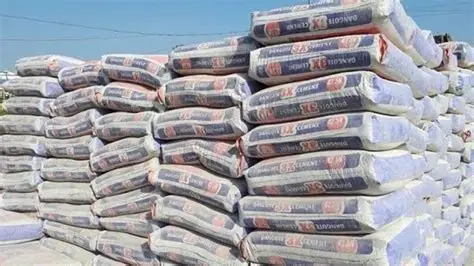
Why do cement prices differ from one state to another in Nigeria? Great question, and the answer comes down to four things:
| State | Dangote (₦/bag) | BUA (₦/bag) | Lafarge (₦/bag) |
|---|---|---|---|
| Lagos | ₦9,500 – ₦12,000 | ₦7,800 – ₦8,500 | ₦8,500 – ₦10,000 |
| Abuja (FCT) | ₦10,000 – ₦12,500 | ₦8,200 – ₦9,000 | ₦8,800 – ₦10,500 |
| Port Harcourt | ₦9,500 – ₦12,000 | ₦8,000 – ₦8,800 | ₦8,600 – ₦10,200 |
| Kano | ₦9,000 – ₦11,500 | ₦7,500 – ₦8,200 | ₦8,200 – ₦9,500 |
| Ibadan | ₦9,500 – ₦11,500 | ₦7,700 – ₦8,400 | ₦8,300 – ₦9,700 |
| Enugu | ₦10,000 – ₦12,000 | ₦8,100 – ₦8,900 | ₦8,700 – ₦10,200 |
| Benin City | ₦9,000 – ₦12,000 | ₦7,800 – ₦8,600 | ₦8,400 – ₦9,800 |
As a general rule, Abuja tends to be the most expensive for cement across all brands, while Kano often has the lowest prices particularly for BUA, which has significant production capacity in the northern region.
If you’re buying in a large-scale say, 600 bags and above, you’ll want to understand trailer pricing. This is where serious builders save real money.
A standard trailer load of cement in Nigeria carries approximately 600 bags (50kg each). Here’s what that looks like in 2026 naira terms:
| Brand | Price Per Bag (Bulk/Trailer) | 600-Bag Trailer Estimate |
|---|---|---|
| Dangote | ₦7,800 – ₦8,500 | ₦4,680,000 – ₦5,100,000 |
| BUA | ₦7,300 – ₦8,000 | ₦4,380,000 – ₦4,800,000 |
| Lafarge (Supaset) | ₦8,000 – ₦9,000 | ₦4,800,000 – ₦5,400,000 |
Note that these trailer estimates are ex-depot or direct-from-distributor prices. Delivery charges vary by distance and are additional.
If you’re building a full duplex or running a housing development, buying in trailer loads is almost always the smarter play. The per-bag savings compound quickly, and you avoid the risk of price jumps mid-project if the market moves against you.
Project Management Tip: At Buildtracka, our construction project management firm, we routinely advise clients to lock in bulk cement purchases early in the project timeline especially during periods of naira volatility or rising diesel costs. Getting your materials procurement strategy right is often the difference between a project that finishes on budget and one that doesn’t.
This is the question every builder eventually asks and the honest answer is: it depends on what you’re building.
For block moulding, you want a cement with good particle size consistency, reliable setting time, and high yield. The top picks are:
For plastering, workability and smooth finish matter most. You want cement that spreads easily, doesn’t crack during drying, and bonds well to block surfaces.
For concrete works e.g slabs, columns, beams, foundations, strength grade matters a lot.
| Application | Best Brand | Second Choice |
|---|---|---|
| Block moulding | BUA / Lafarge Supaset | Dangote |
| Plastering & rendering | BUA | Dangote / Lafarge Elephant |
| Concrete (general) | Dangote | BUA |
| Heavy structural concrete | Lafarge Powermax | Dangote |
| Coastal construction | Lafarge SRC | Dangote |
| Roof tile production | Lafarge Etex | N/A |
Okay, this is the argument that plays out in every building materials market in Nigeria. Let me give you an honest breakdown rather than a brand loyalty speech.
| Factor | Dangote | BUA |
|---|---|---|
| Price | Slightly higher on average | Usually ₦300–₦700 cheaper |
| Availability | Widest national distribution | Growing rapidly, strong in North |
| Block moulding yield | Good | Slightly better (per builder feedback) |
| Plastering workability | Very good | Very good |
| Structural concrete | Excellent | Excellent |
| Brand trust / history | Dominant market leader | Rising challenger brand |
The truth is: both brands meet Nigerian Industrial Standards (NIS) requirements. For most residential builds, bungalows, duplexes, blocks of flats, either will work well. The decision usually comes down to price and local availability.
If you’re deciding on your entire construction strategy not just cement, you might want to also look at our breakdown of architect fees in Nigeria and how to build a house step by step in Nigeria. Getting the full picture before you break ground saves more money than any cement deal ever will.
I’ve managed enough construction projects in Nigeria to know that smart procurement is half the battle. Here’s what actually works:
A 50kg bag of cement in Nigeria retails between ₦9,500 and ₦10,500 in 2026, depending on the brand, location, and whether you’re buying retail or wholesale.
Dangote cement is currently priced at ₦8,000 – ₦9,500 per 50kg bag across most Nigerian markets, with Abuja tending toward the upper range and Kano toward the lower end.
BUA cement retails at ₦7,500 – ₦9,000 per bag and is generally the most affordable of the three major brands without sacrificing quality for standard construction applications.
Lafarge cement ranges from ₦8,200 to ₦11,000 per bag depending on the specific product. General-purpose Elephant Cement sits at the lower end; specialised products like SRC and Powermax are higher.
Generally, BUA is the cheapest of the three major brands, followed by Dangote, with Lafarge’s specialised products at the top of the price range. For most residential projects, BUA offers the best price-to-quality balance.
A trailer load (typically 600 bags) costs approximately ₦4.4 million to ₦5.4 million depending on the brand and current market conditions. Dangote typically costs ₦4.7–₦5.1 million, BUA around ₦4.4–₦4.8 million, and Lafarge Supaset between ₦4.8–₦5.4 million.
Yes, generally. Abuja tends to have the highest cement prices of the three cities, primarily because it is farther from major cement production sites. Lagos and Port Harcourt are usually slightly cheaper, with Port Harcourt varying more based on regional supply.
BUA Cement and Lafarge Elephant Supaset are widely regarded as the best choices for block moulding in Nigeria. BUA is favoured for its yield per bag; Supaset is purpose-engineered for sandcrete production.
For plastering, BUA and Dangote both perform excellently. For heavy structural concrete, Lafarge Powermax is the premium option; Dangote and BUA handle standard concrete mixes very well.
The cement price in Nigeria in 2026 is not fixed. It moves with the naira, diesel costs, factory output, and market demand. But armed with the data in this guide, you’re no longer buying blind.
Whether you go with Dangote’s distribution reach, BUA’s competitive pricing, or Lafarge’s specialised product range depends on your project type, your location, and your budget. There’s no universal winner, but there’s definitely a right answer for your specific situation.
And if you want expert eyes on your construction project, from procurement strategy to on-site supervision, that’s exactly what we do at Buildtracka. We help builders and homeowners navigate the full complexity of Nigerian construction: budgets, timelines, contractor management, and material procurement.
Building smart starts with buying smart. Now you have the numbers — use them.
Related Articles